Fighting for Equality: Q&A with Taylor Phillips

A graphic that reads "Guest Lecture Series: Taylor Philips" with a photograph of Phillips.

In anticipation of her guest lecture on Wednesday, June 10, “Fighting for Equality: World War I and American Women’s Struggle for Suffrage,” we sat down with Taylor Phillips for a brief preview of the topic.

How important were women to American participation in World War I?

Women were incredibly important to the American war effort in the First World War. With almost 3 million men being drafted for the war, their absence left tremendous gaps in all kinds of industries around the country that would then be taken up by women. Women were instrumental to the success of the war both at home and abroad, as they organized vast networks to fundraise for war bonds, conserve food, produce personal items for soldiers, and so much more. They were also part of the very infrastructure of the war through their service to the U.S. military in all manner of clerical positions, as nurses and physicians, and through their work with numerous voluntary organizations.

What roles would we be surprised women played?

I think people might be surprised to learn that the very first women to officially enlist and serve in the U.S. Navy (or any branch of the U.S. armed forces for that matter), were women in World War I. American women also helped pioneer physical and occupational therapy professional practices in World War I by working as reconstruction aides to systematically rehabilitate wounded soldiers. And despite the fact that women abroad did not serve in combat roles in this war, their work often brought them close to the Front, and into the constant danger that came with it.

We tend to hear a lot about women supporting the war effort by going to work during World War II. Why do you think women’s participation in World War I has become a blind spot?

In America, I think the discussion of World War I in general gets overshadowed by World War II because the U.S. was involved in the First World War for a much shorter period of time (less than 2 years) compared with the Second World War, and World War I did not have the distinct moral dichotomy that World War II did. The Great War is also further back in American memory, as there are no living participants of this global conflict still with us today. With all of this in mind, I think women’s participation in World War I is often particularly overlooked because the war did not have a major lasting impact on women’s equality in society that later conflicts would have (with an exception, of course, for women gaining their right to vote). 

How did this work end up contributing to the suffrage movement?

It was a long-held belief in American society that the right to vote only belonged to citizens who could defend their country militarily, which in turn was used as a reason to deny women suffrage. Women’s service in World War I proved to the nation and the world that American women were patriotic, loyal, and capable citizens who were indispensable to the war effort and admirably served and defended their country during wartime. Supporters of women’s suffrage would use women’s wartime service as further proof that women deserved the right to vote, and that suffrage was actually a military necessity to ensure that women could continue to contribute to the war effort effectively.

Join us Wednesday to hear more amazing details on this subject!

Crafting Through History Q&A

featuring Emma Lynch, Visitor Center Manager & Development Associate

On April 25, we will host Crafting Through History: Crochet, the first installment of our new partnership with SewGreen pairing discussions of the women’s rights movement with fiber arts instruction. We asked Emma Lynch, our development associate who will be leading the discussion, a few questions to whet our appetites.

What role has crafting played in the history of the women’s rights movement?

Suffragists such as Carrie Chapman Catt, would hold suffrage fairs: Fairs for women to sell their handmade goods to generate donations for the movement. Crochet, along with other fiber arts like knitting and quilting, would be used as a tool for empowerment and protest.

Was Susan B. Anthony crafty?

When Susan was younger she was quite gifted at needlepoint—we have a reproduction of a sampler that she made when she was around 11 years old in Susan B. Anthony’s study. As she got older, and became busier fighting for universal suffrage and various human rights, she didn’t have too much time to be crafty!

What is it about fiber arts that seems to lend itself to women getting together?

Fiber arts became what some call a form of “quiet activism.” It allowed for individuality, self-expression and created a sense of community. It was a way for women to challenge the idea of femininity while rejecting the notion that fiber arts was simply just “women’s work.”

What is the most surprising thing you’ve learned about crochet?

Trying to find the origins of crochet is not as easy as it might seem. Crochet did not originate from one singular person, culture or country, as various forms of this fiber art can be traced back to countries as far apart as Persia and Ireland.

Allison Hinman Named New President & CEO of Anthony Museum

Hinman Led National Field of Candidates with Experience and Vision

Effective January 2, 2026, the National Susan B. Anthony Museum & House will be under the leadership of new President & CEO Allison Hinman. Following a national search that garnered 27 well-qualified candidates, Hinman was chosen as the successor to outgoing President & CEO Deborah L. Hughes, who has led the organization for more than 18 years.

About Allison Hinman

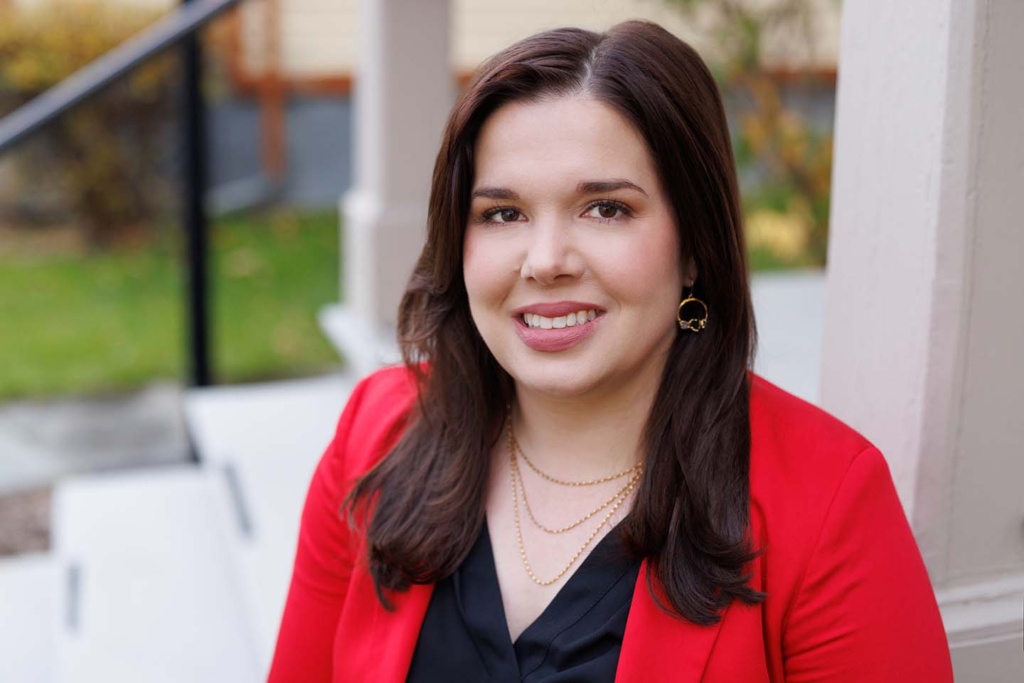
Hinman joined the Anthony Museum in 2021 as Deputy Director and was promoted to Chief Operating Officer in 2024. An experienced museum professional, Hinman provides significant experience in fundraising, education, and programming. She helped develop the Anthony Museum’s current strategic plan and as a member of the Building and Exhibit Planning Committee for the last five years, she provides crucial continuity for the ongoing campus expansion. Under her leadership as Chief Operating Officer, school visitation has surged to more than 2,000 students per year, and the Museum became an early voting site for Monroe County and welcomed 6,000 voters.

Prior to joining the Anthony Museum, she developed a wealth of experience in historic house museums at the George Eastman Museum in Rochester and the Seward House Museum in Auburn, New York. In addition to her museum work, Hinman teaches courses in museum studies and museum education at SUNY Oswego. She holds two masters degrees from Syracuse University, one in museum studies and another in arts leadership administration.

About Deborah L. Hughes

Hughes leaves the Anthony Museum following an 18-year tenure during which she quadrupled the organization’s annual income, doubled its on-site attendance, and secured its absolute charter as a museum. She also guided a restoration of the Susan B. Anthony House, a National Historic Landmark, and increased community engagement with programs like VoteTilla and the 2020 Quilt Project. An inspiring speaker and honored member of the Rochester community, Hughes says, “Though it is difficult to leave, I’m proud to be leaving the Anthony Museum with a diverse, highly skilled staff and an energetic board that is more than ready to continue the work of preserving Susan B. Anthony’s legacy for decades to come.”

Endorsements

“As Board Chair, I have worked with Allison for the past three years.  She has improved the programming and increased the number of school children visiting the House; she understands the legacy of Susan B. Anthony; she has significant museum experience; and she has been an active participant in the design of the Interpretive Center. She has the vision, passion and dedication to lead the Museum into the future. The Board could not have made a better choice.”
—Craig J. Zicari, Chair, Board of Trustees

“Allison Hinman is the ideal person to lead the National Susan B. Anthony Museum and House. She has a unique combination of experience and expertise that will be so important in the future campus expansion project. She is a strong advocate for Rochester and the role of museums as cultural and educational resources for the city. She is also a respected professional with a stellar reputation around the state and nation.”
—Brent Glass, Director Emeritus of the Smithsonian National Museum of American History

“I am thrilled that Allison Hinman will be the next CEO of the National Susan B. Anthony Museum and House. Her graduate training in Museum Studies and Arts Administration at Syracuse University and her work experience at several of the leading historic house museums in our area leave her uniquely prepared for this role. Allison is deeply committed to meeting the needs of the community and she will ensure that the Anthony Museum continues to expand offerings and inspire future changemakers with Anthony’s vision of human rights for all.”
—Tamar W. Carroll, PhD, Secretary, Board of Trustees

“Allison will continue to build on the museum’s legacy while leading the expansion and innovating for the future. Given her innate ability to educate and inspire others regarding the life and work of Susan B. Anthony, the Board values Allison’s capacity to foster a sense of community.”
—Heidi Schult Gregory, Board of Trustees