
featuring Emma Lynch, Visitor Center Manager & Development Associate
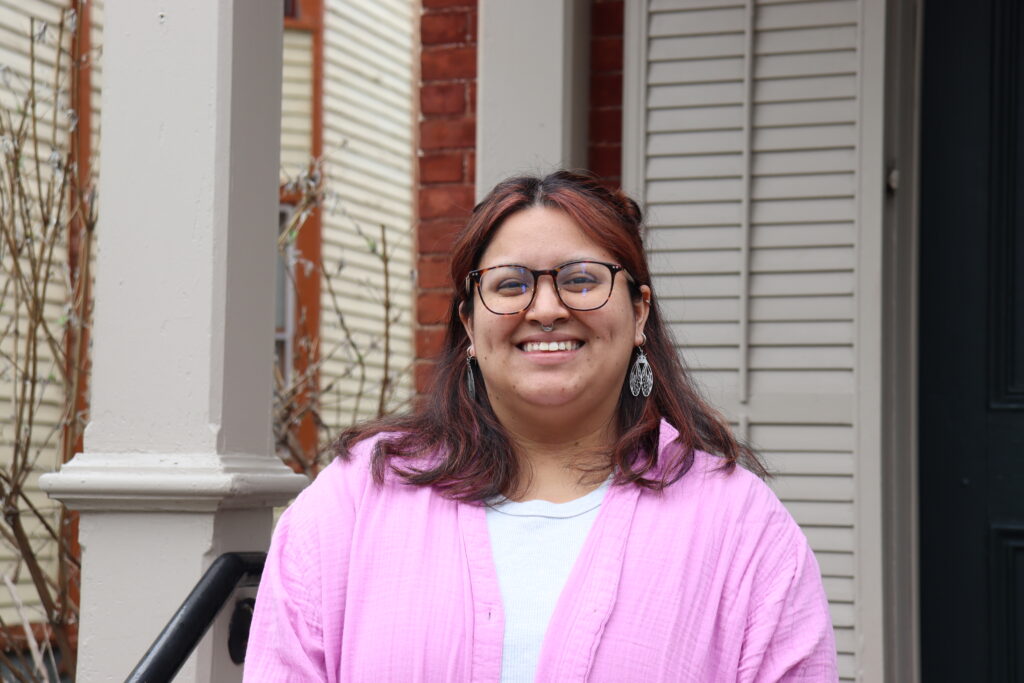
On April 25, we will host Crafting Through History: Crochet, the first installment of our new partnership with SewGreen pairing discussions of the women’s rights movement with fiber arts instruction. We asked Emma Lynch, our development associate who will be leading the discussion, a few questions to whet our appetites.
What role has crafting played in the history of the women’s rights movement?
Suffragists such as Carrie Chapman Catt, would hold suffrage fairs: Fairs for women to sell their handmade goods to generate donations for the movement. Crochet, along with other fiber arts like knitting and quilting, would be used as a tool for empowerment and protest.
Was Susan B. Anthony crafty?
When Susan was younger she was quite gifted at needlepoint—we have a reproduction of a sampler that she made when she was around 11 years old in Susan B. Anthony’s study. As she got older, and became busier fighting for universal suffrage and various human rights, she didn’t have too much time to be crafty!
What is it about fiber arts that seems to lend itself to women getting together?
Fiber arts became what some call a form of “quiet activism.” It allowed for individuality, self-expression and created a sense of community. It was a way for women to challenge the idea of femininity while rejecting the notion that fiber arts was simply just “women’s work.”
What is the most surprising thing you’ve learned about crochet?
Trying to find the origins of crochet is not as easy as it might seem. Crochet did not originate from one singular person, culture or country, as various forms of this fiber art can be traced back to countries as far apart as Persia and Ireland.

Published by