The Meaning Behind Susan B.’s Vote

Susan B. Anthony knew it was illegal to vote as a woman in 1872, so why did she do it? More than just a passionate statement, Susan B. planned this moment in history as a strategic bid for publicity in a world that largely ignored woman’s suffrage.

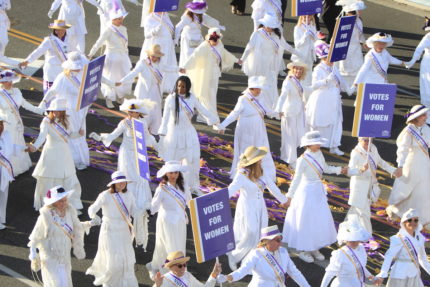
The suffragists did nothing by accident. On the day that Susan B. voted, suffragists across the United States (including influential figures like Sojourner Truth) marched to the polls and attempted to cast their ballot using the language of the 14th Amendment, which stated that all citizens have the right to vote. These women weren’t hoping to sneak under the radar with their “loophole”; instead, they used this message as a nation-wide protest. As woman after woman was turned away from the polls, people and papers started talking about woman’s suffrage. 

On Madison Street, Susan B., her sister Mary, and the group of women with them were prepared to face ridicule, reporters, and stubborn opposition. The band was formed of older activists like Rhoda DeGarmo, single women and mothers, younger ladies like Charlotte Bowles Anthony and Margaret Garrigues Leyden, and next-door neighbor Sarah Cole Truesdale. Of the local women who voted on November 5th, none received more backlash than Susan B. herself. Initially, poll workers and officers were cautious in their reactions, unsure of how to handle these polite, feminine law-breakers. Susan B. Anthony knew that this moment could not be lost to history however, and she took every chance she could to spread the word about what she had just done. On November 18th, she was arrested by a local sheriff and told to show up to her trial in a few months.

Since she was not detained prior to her trial, Susan B. traveled locally, delivering her famous “Is It a Crime for a Citizen to Vote?” speech. Newspapers quickly caught on, and the story spread like wildfire. All sorts of opinions about woman’s suffrage began landing on people’s doorsteps, ranging from slander and insults to confusion to praise and admiration. One thing was certain: all of Rochester was talking about women’s roles in civics and soon, the whole nation would follow suit.
Fighting for Equality: Q&A with Taylor Phillips

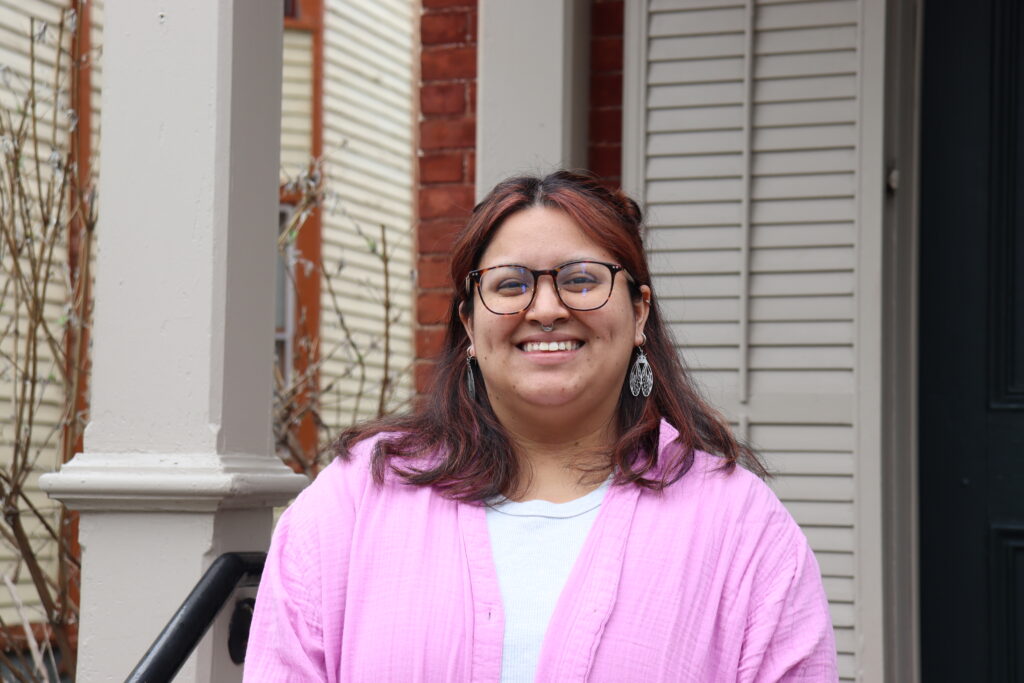
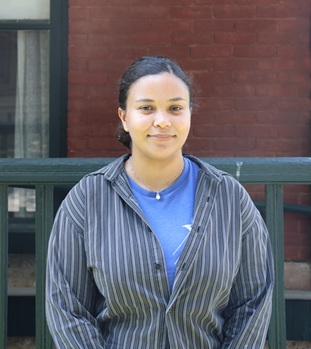
A graphic that reads "Guest Lecture Series: Taylor Philips" with a photograph of Phillips.

In anticipation of her guest lecture on Wednesday, June 10, “Fighting for Equality: World War I and American Women’s Struggle for Suffrage,” we sat down with Taylor Phillips for a brief preview of the topic.

How important were women to American participation in World War I?

Women were incredibly important to the American war effort in the First World War. With almost 3 million men being drafted for the war, their absence left tremendous gaps in all kinds of industries around the country that would then be taken up by women. Women were instrumental to the success of the war both at home and abroad, as they organized vast networks to fundraise for war bonds, conserve food, produce personal items for soldiers, and so much more. They were also part of the very infrastructure of the war through their service to the U.S. military in all manner of clerical positions, as nurses and physicians, and through their work with numerous voluntary organizations.

What roles would we be surprised women played?

I think people might be surprised to learn that the very first women to officially enlist and serve in the U.S. Navy (or any branch of the U.S. armed forces for that matter), were women in World War I. American women also helped pioneer physical and occupational therapy professional practices in World War I by working as reconstruction aides to systematically rehabilitate wounded soldiers. And despite the fact that women abroad did not serve in combat roles in this war, their work often brought them close to the Front, and into the constant danger that came with it.

We tend to hear a lot about women supporting the war effort by going to work during World War II. Why do you think women’s participation in World War I has become a blind spot?

In America, I think the discussion of World War I in general gets overshadowed by World War II because the U.S. was involved in the First World War for a much shorter period of time (less than 2 years) compared with the Second World War, and World War I did not have the distinct moral dichotomy that World War II did. The Great War is also further back in American memory, as there are no living participants of this global conflict still with us today. With all of this in mind, I think women’s participation in World War I is often particularly overlooked because the war did not have a major lasting impact on women’s equality in society that later conflicts would have (with an exception, of course, for women gaining their right to vote). 

How did this work end up contributing to the suffrage movement?

It was a long-held belief in American society that the right to vote only belonged to citizens who could defend their country militarily, which in turn was used as a reason to deny women suffrage. Women’s service in World War I proved to the nation and the world that American women were patriotic, loyal, and capable citizens who were indispensable to the war effort and admirably served and defended their country during wartime. Supporters of women’s suffrage would use women’s wartime service as further proof that women deserved the right to vote, and that suffrage was actually a military necessity to ensure that women could continue to contribute to the war effort effectively.

Join us Wednesday to hear more amazing details on this subject!

Crafting Through History Q&A

featuring Emma Lynch, Visitor Center Manager & Development Associate

On April 25, we will host Crafting Through History: Crochet, the first installment of our new partnership with SewGreen pairing discussions of the women’s rights movement with fiber arts instruction. We asked Emma Lynch, our development associate who will be leading the discussion, a few questions to whet our appetites.

What role has crafting played in the history of the women’s rights movement?

Suffragists such as Carrie Chapman Catt, would hold suffrage fairs: Fairs for women to sell their handmade goods to generate donations for the movement. Crochet, along with other fiber arts like knitting and quilting, would be used as a tool for empowerment and protest.

Was Susan B. Anthony crafty?

When Susan was younger she was quite gifted at needlepoint—we have a reproduction of a sampler that she made when she was around 11 years old in Susan B. Anthony’s study. As she got older, and became busier fighting for universal suffrage and various human rights, she didn’t have too much time to be crafty!

What is it about fiber arts that seems to lend itself to women getting together?

Fiber arts became what some call a form of “quiet activism.” It allowed for individuality, self-expression and created a sense of community. It was a way for women to challenge the idea of femininity while rejecting the notion that fiber arts was simply just “women’s work.”

What is the most surprising thing you’ve learned about crochet?

Trying to find the origins of crochet is not as easy as it might seem. Crochet did not originate from one singular person, culture or country, as various forms of this fiber art can be traced back to countries as far apart as Persia and Ireland.

Allison Hinman Named New President & CEO of Anthony Museum

Hinman Led National Field of Candidates with Experience and Vision

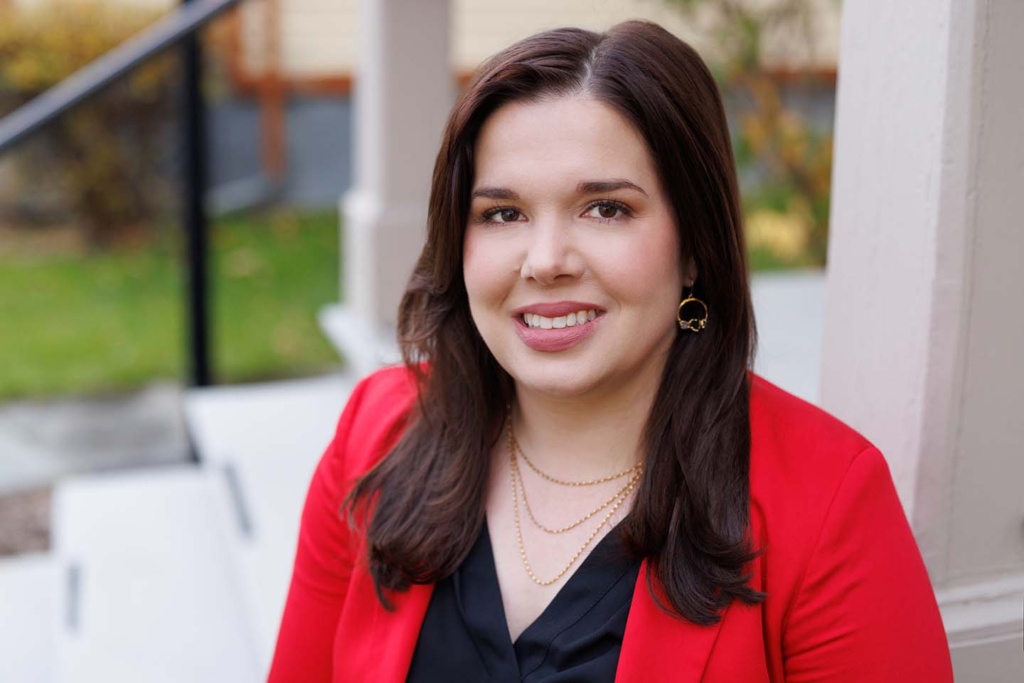
Effective January 2, 2026, the National Susan B. Anthony Museum & House will be under the leadership of new President & CEO Allison Hinman. Following a national search that garnered 27 well-qualified candidates, Hinman was chosen as the successor to outgoing President & CEO Deborah L. Hughes, who has led the organization for more than 18 years.

About Allison Hinman

Hinman joined the Anthony Museum in 2021 as Deputy Director and was promoted to Chief Operating Officer in 2024. An experienced museum professional, Hinman provides significant experience in fundraising, education, and programming. She helped develop the Anthony Museum’s current strategic plan and as a member of the Building and Exhibit Planning Committee for the last five years, she provides crucial continuity for the ongoing campus expansion. Under her leadership as Chief Operating Officer, school visitation has surged to more than 2,000 students per year, and the Museum became an early voting site for Monroe County and welcomed 6,000 voters.

Prior to joining the Anthony Museum, she developed a wealth of experience in historic house museums at the George Eastman Museum in Rochester and the Seward House Museum in Auburn, New York. In addition to her museum work, Hinman teaches courses in museum studies and museum education at SUNY Oswego. She holds two masters degrees from Syracuse University, one in museum studies and another in arts leadership administration.

About Deborah L. Hughes

Hughes leaves the Anthony Museum following an 18-year tenure during which she quadrupled the organization’s annual income, doubled its on-site attendance, and secured its absolute charter as a museum. She also guided a restoration of the Susan B. Anthony House, a National Historic Landmark, and increased community engagement with programs like VoteTilla and the 2020 Quilt Project. An inspiring speaker and honored member of the Rochester community, Hughes says, “Though it is difficult to leave, I’m proud to be leaving the Anthony Museum with a diverse, highly skilled staff and an energetic board that is more than ready to continue the work of preserving Susan B. Anthony’s legacy for decades to come.”

Endorsements

“As Board Chair, I have worked with Allison for the past three years.  She has improved the programming and increased the number of school children visiting the House; she understands the legacy of Susan B. Anthony; she has significant museum experience; and she has been an active participant in the design of the Interpretive Center. She has the vision, passion and dedication to lead the Museum into the future. The Board could not have made a better choice.”
—Craig J. Zicari, Chair, Board of Trustees

“Allison Hinman is the ideal person to lead the National Susan B. Anthony Museum and House. She has a unique combination of experience and expertise that will be so important in the future campus expansion project. She is a strong advocate for Rochester and the role of museums as cultural and educational resources for the city. She is also a respected professional with a stellar reputation around the state and nation.”
—Brent Glass, Director Emeritus of the Smithsonian National Museum of American History

“I am thrilled that Allison Hinman will be the next CEO of the National Susan B. Anthony Museum and House. Her graduate training in Museum Studies and Arts Administration at Syracuse University and her work experience at several of the leading historic house museums in our area leave her uniquely prepared for this role. Allison is deeply committed to meeting the needs of the community and she will ensure that the Anthony Museum continues to expand offerings and inspire future changemakers with Anthony’s vision of human rights for all.”
—Tamar W. Carroll, PhD, Secretary, Board of Trustees

“Allison will continue to build on the museum’s legacy while leading the expansion and innovating for the future. Given her innate ability to educate and inspire others regarding the life and work of Susan B. Anthony, the Board values Allison’s capacity to foster a sense of community.”
—Heidi Schult Gregory, Board of Trustees

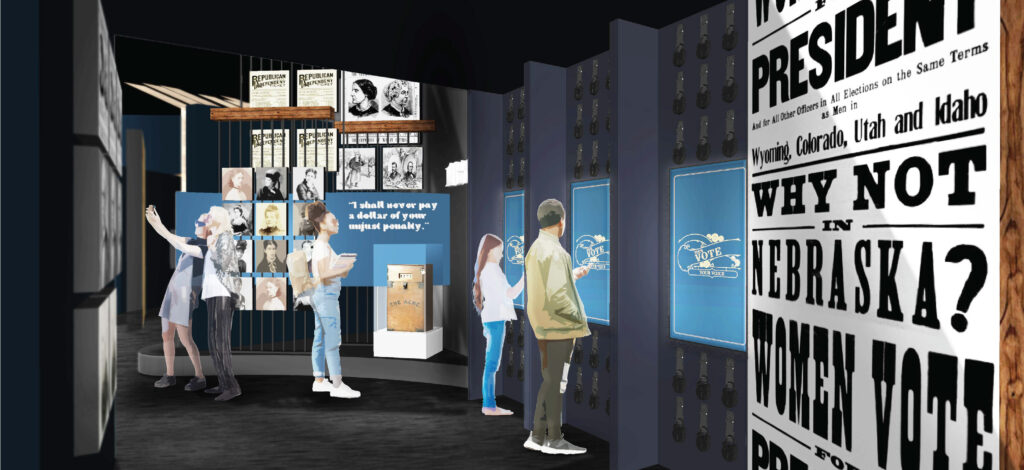
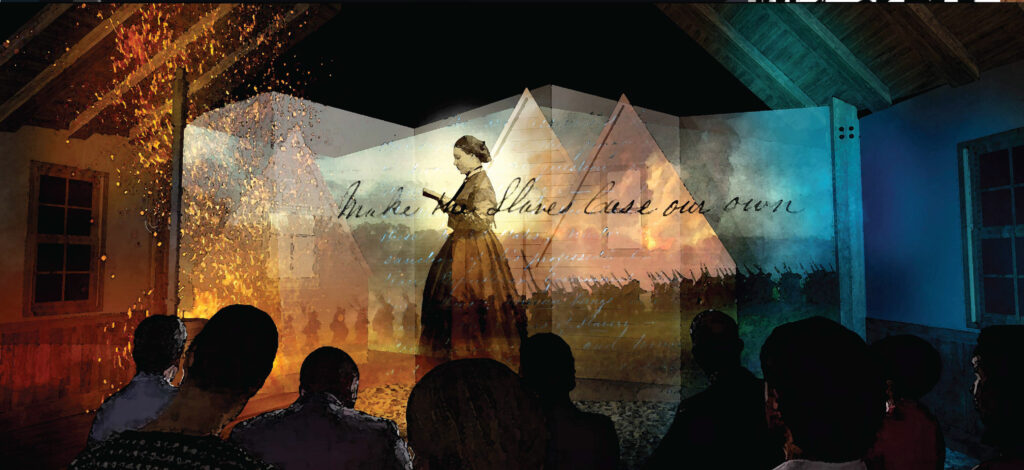
We’re Expanding!

Plans are under way to expand the Anthony Museum campus! We will be building a new interpretive center at the intersection of Brown Street and Jefferson Ave, about 900 feet from our current campus.

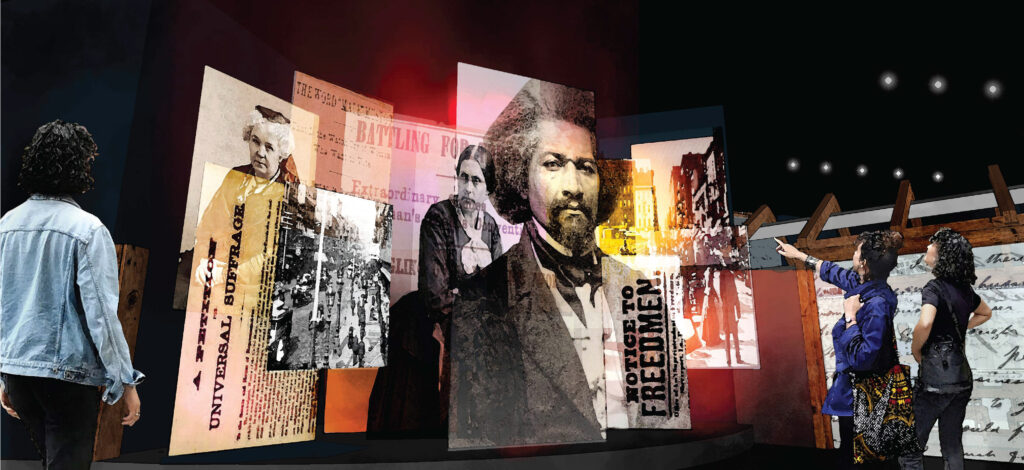
exhibit rendering

The new building will have a 3,000 sq ft wing dedicated to the long-term care, conservation, and research of our permanent collection of invaluable objects, with state-of-the-art security, fire suppression, and environmental controls. We will have a 6,000 sq ft exhibit area featuring engaging, immersive experiences that will share the impact and relevance of Susan B. Anthony’s life and work. In addition to flexible space for programs, receptions, and the museum shop, there will be a catering kitchen and enough bathrooms to accommodate bus tours and school groups during the busiest seasons.

For eight decades, the Anthony Museum’s impact has been constrained by the capacity of its facilities. (The Susan B. Anthony House is limited to 35 visitors at a time, by fire code.) The campus expansion will increase that capacity five-fold! This will allow the Museum to accommodate thousands more visitors. During the sunny months, those visitors will be mostly tourists who come from outside our area, bringing economic growth. During the winter months, the Anthony Museum will have to capacity to expand our outreach and programs for our local community.

We are excited to move ahead with this project that will allow us to expand our reach and impact. The property, soon to be known as 1 Jefferson Avenue, has been acquired. The site and parking and exterior building plans have been approved by the City.

We have raised $16 million of the $25 million needed for the project. Once we have raised the balance, we will be able to take the next steps to break ground.

exhibit rendering
exhibit rendering

Meet: John Van Voorhis

While our Carriage House has been under construction, many guests might have noticed a new addition in the well-known Front Parlor of 17 Madison Street.

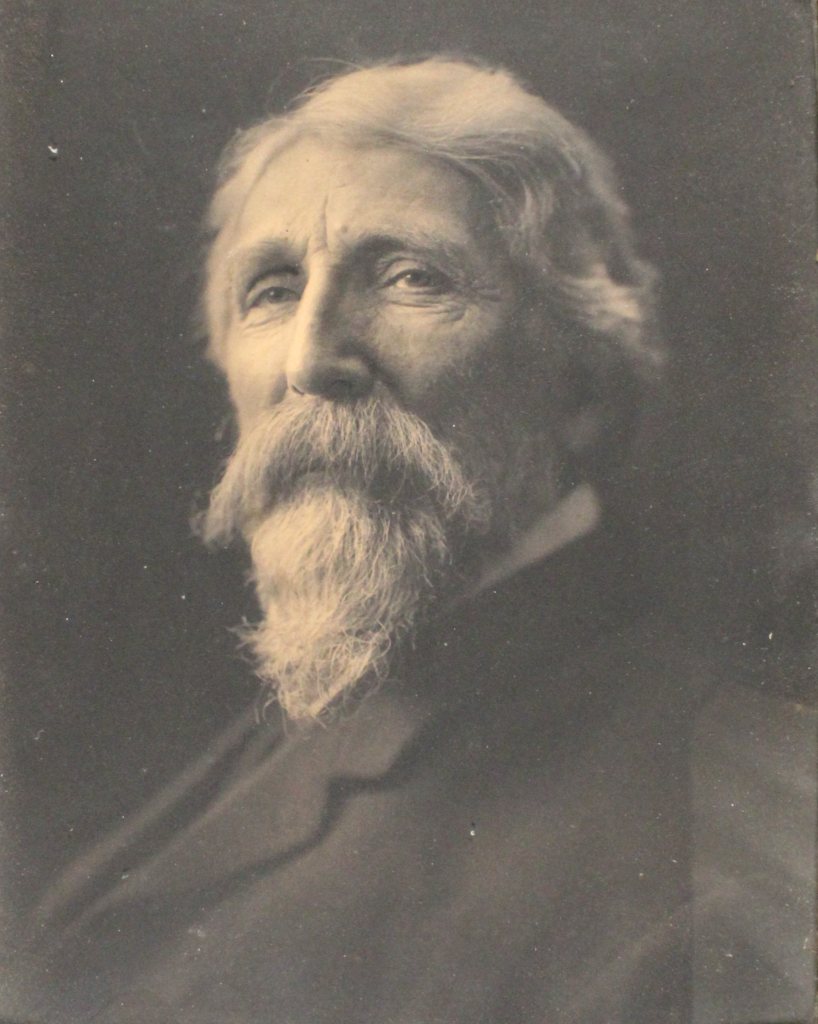
This room has become the temporary location for this bust of attorney John Van Voorhis. Van Voorhis was born in Decatur, New York, in 1826. He passed the bar in 1851 and began practicing in Elmira, New York. Later, he moved to Rochester and opened his own practice in 1854. He defended people like abolitionist Frederick Douglass and assisted the Seneca Nation in land disputes. 

Van Voorhis was Susan B. Anthony’s lead defense attorney when she was tried and convicted of voting in the presidential election of 1872. 

He also served three terms as a United States Congressman between 1879 and 1895. 

A Chicago artist, Robert Lee MacCameron, was hired to paint a portrait of Van Voorhis. MacCameron has pieces at the Smithsonian American Art Museum in DC, the Memorial Art Gallery in Rochester, and museums in England and France. He is most notable for painting a portrait of President William Howard Taft.

It was typical for the artist to live in residency, so he lived with the Van Voorhis family in their Rochester home. While there, MacCameron started a relationship with Van Voorhis’ daughter Louise, and the two later married. 

The newlyweds moved to Paris, where MacCameron continued his art education at the Beaux Arts School and received several prestigious awards for his work. 

Upon their return to Rochester, MacCameron sculpted a marble bust of his Father-in-Law, which is currently in the Ontario County Courthouse, where Susan B. Anthony’s trial was held. This bronze cast is of the original marble bust. The Van Voorhis descendants donated the bronze bust to the Anthony Museum in 2021.

We hope you visit the museum and say hi to John! 

Get to Know Rhoda DeGarmo

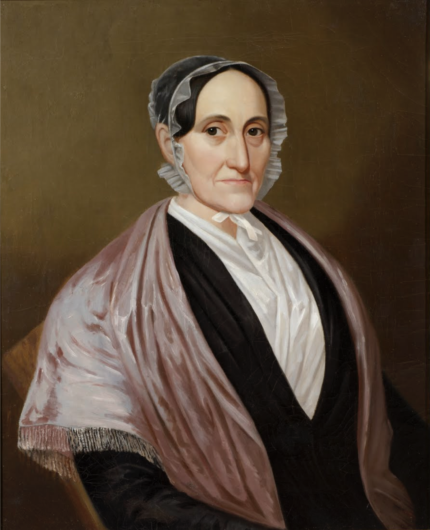
Meet Rhoda DeGarmo, an ardent anti-slavery advocate, temperance worker, suffragist, friend of Anthony and Stanton, yet for many today, an unfamiliar name. What did she do for women’s rights? What would she say to us today about the importance of voting?

Born in Massachusetts in 1798 or 1799, Rhoda and her husband, Elias DeGarmo, were farmers in Gates, NY, just outside of Rochester, in the 1800s. The DeGarmos were part of the network of anti-slavery activists who made up the Underground Railroad in the region. Their home often provided refuge for enslaved persons fleeing to Canada. She was one of the first people to join the Western New York Anti-Slavery Society when it was formed in 1842. She later became part of its equivalent of an executive committee, organizing Anti-Slavery Fairs all around the region. When Daniel and Lucy Anthony moved with their family to a neighboring farm in Gates in late 1845, the families discovered they had much in common and became close friends, working together on anti-slavery, temperance, and women’s rights causes.

In June of 1848, Rhoda DeGarmo and other Quakers walked out of the Genesee Yearly Meeting of Friends when the elders objected to their anti-slavery activities. The next month, at the Women’s Rights Convention in Seneca Falls, she was chosen as one of the organizers for the adjourned convention, to be held in Rochester in August. She supported the move to appoint a woman to preside over the Rochester convention, something strongly opposed by other women delegates as “a most hazardous experiment.” Lucretia Mott and Elizabeth Cady Stanton refused to sit on the dais with a woman presiding.

Throughout her life, Rhoda DeGarmo worked with anti-slavery groups, with state and local women’s rights organizations, and  temperance organizations, earning her a respected place as a human-rights activist among her contemporaries.  She was a frequent visitor at the Anthony home in Rochester. She was a member of the Rochester Political Equality Club formed by Mary Anthony. In 1872, when Susan B. Anthony famously registered and voted in the presidential election, claiming her vote as a right of citizenship under the XIV Amendment, Rhoda DeGarmo, by then in her 70s, was right there, one of the 14 other women voting with her. Rhoda DeGarmo died in 1873, a few months after she dared to vote.

[Ed. note: In 1848, Rhoda DeGarmo’s portrait was created by artist C. Hoag, a painting that came to the Anthony Museum from a direct descendant. The portrait was conserved in 2012 with funding provided by the Greater Hudson Heritage Network and work performed by Tracy Dulniak of Great Lakes Art Conservation, LLC. This portrait is on display in Mary Anthony’s study in the Susan B. Anthony House at the Anthony Museum.]

How Indigenous Women Championed Suffrage

Pictured: Bark Longhouse at Ganondagan State Historic Site in Victor, NY. Special thanks to the staff at Ganondagan for their incredibly informative tour and resources on this topic. 

While many point to the Seneca Falls Convention and its female abolitionists as the birth of the women’s rights movement here in New York State, there is a long history of women’s equality that predates European presence in North America. 

The Haudenosaunee (“People of the Longhouse”) are a democratic coalition of Six Nations: Seneca, Cayuga, Onondaga, Oneida, Mohawk, and later, Tuscarora, who put an end to a period of war and ushered in an era of peace and prosperity for its people. It became the longest running recorded democracy in history, inviting all to participate, regardless of gender. Under the Haudenosaunee government, Clan Mothers represented their clans (a group of extended family members) and gained incredible respect by listening carefully  to the voice of their community and bringing those needs to the Hoyaneh (male leader of a clan). Clan Mothers were responsible for appointing Hoyaneh, but instead of choosing warriors, they consistently chose men who had never killed in battle. If this man proved to be an irresponsible leader, this council of women also had the power to remove him from office. These wise women know the young men of their tribe well, and are careful to choose a Hoyaneh that will represent his people well in the broader Haudenosaunee government.

Women’s roles were respected in the home, as well. Because bloodlines were (and still are) traced through the mother, not the father, children inherit their mother’s clan name. When a couple married, the man would leave his tribe/family to live with his new wife and her family, sharing child rearing duties with the whole community*. In the case of divorce, which was openly available to women, children stayed with the mother’s clan and the ex-husband was sent back to his parents. Possibly the most telling sign of the happy, healthy, female community during this time was the rarity of assault. Family groups practiced a very open style of living in longhouses, which prevented secrecy and encouraged strong community bonds. The recorded cases of sexual misconduct that we can study from this time were punished severely, in accordance with the strong religious and social values the crime violated. Overall, history shows us that Haudenosaunee women enjoyed peace, safety, and social respect. While European-American women in the 1800’s were told to hold their tongue, obey their patriarch, and surrender their income and property, Indigenous women were encouraged to voice their opinions, lead a household, and manage resources. It is a model that early suffragists found absolutely inspiring.

Haudenosaunee women were happy to teach their lifestyle to suffragists like Matilda Joslyn Gage, an early and outspoken proponent of Indigenous life as the premier model for the suffrage movement. Gage fostered a relationship with local tribes throughout her life and took what she learned back to her own community. Although most suffragists dismissed Gage as a radical, shrewd strategists like Susan B. Anthony and Lucretia Mott deeply admired the harmony and independence of female life in Haudenosaunee tribes, mirroring that system in their own goals for the women’s right movement. In democracy and equality, the United States owes so much to the teachings of First Nations People.

* Many sources reveal that married men were still active in the lives of their birth family, including helping care for their sisters’ children, etc.

The Trial of Susan B. Anthony

a bench from Susan B. Anthony’s courtroom in Canandaigua, currently on view at the National Women’s Hall of Fame

Do you wish you had more power to change the world? The injustice we see in our daily lives can become overwhelming, leading us to believe that we are powerless to stop it.

Enter Susan B. Anthony.

On June 17, 1873, Susan B. stood in a Canandaigua courthouse listening to her male lawyer plead to a male jury in front of a male judge about a woman’s right to vote. She had already caused several headaches for local officials this year, most notably, by voting in the most recent presidential election. Her vote, along with fourteen female neighbors who voted alongside her, caused a stir in Rochester which Susan B. used as a platform to spread her message. She traveled the county delivering a fiery speech, advocating for the right of all people to vote. According to scholar Ann D. Gordon, “Anthony spoke in twenty-nine villages and towns of Monroe County, asking ‘Is it a Crime for a U.S. Citizen to Vote?’ When she delivered her lecture in Rochester, the county’s principal city, a daily newspaper printed her speech in full, circulating it further.” (p 34, The Trial of Susan B. Anthony)

Associate justice of the Supreme Court Ward Hunt, who was known by some to oppose the cause of suffrage, arrived to preside over the case. The court did not meet in Rochester, but in the nearby town of Canandaigua, NY. There, Susan B. sat for two days as proceedings continued, certain that the jury could see the logic behind her daring act.

As the case drew to a close, the jurors who had heard Susan B.’s story were prepared to deliberate, but Judge Hunt stopped them. He had already made up his mind, and told them so. With one action, the Judge became infamous in law journals, nationwide newspapers, and public opinion for denying Susan B. Anthony a trial by jury. He delivered her guilty verdict, along with a fine of $100, which she refused to pay. Then, he gave her the opportunity to address the court in what he no doubt assumed would be a short, defeated statement.

Susan B. stood.

“Yes, your honor, I have many things to say; for in your ordered verdict of guilty you have trampled under foot every vital principle of our government. My natural rights, my civil rights, my political rights, my judicial rights, are all alike ignored…” She held the court spellbound despite Judge Hunt’s repeated protests, refusing to sit down until she had finished. She spoke of natural rights, of logic, of governmental representation, but most of all, the injustice of the system that found her guilty.

“All of my prosecutors—from the 8th ward corner grocery politician, who entered the complaint, to the United States Marshal, Commissioner, District Attorney, District Judge, your honor on the bench—not one is my peer, but each and all are my political sovereigns; and had your honor submitted my case to the jury, as was clearly your duty, even then I should have had just cause of protest for not one of those men was my peer; but, native or foreign born, white or black, rich or poor, educated or ignorant, awake or asleep, sober or drunk, each and every man of them was my political superior; hence, in no sense, my peer.”

Her trial in 1873 became a hallmark of the suffrage movement, and her call for the right of all people to vote rings in our ears 150 years later. In the face of a broken system, Susan B. Anthony took action to achieve justice, building a network of support that lived beyond her. The work continued in the women who wrote the 19th Amendment, the women who fought for the vote of minority communities, and the women who work to ensure a safe and educated vote for all people today. Remember: we walk in the footsteps of women who kicked open doors that were closed to them; we can change injustice.