Allison Hinman Named New President & CEO of Anthony Museum

Hinman Led National Field of Candidates with Experience and Vision

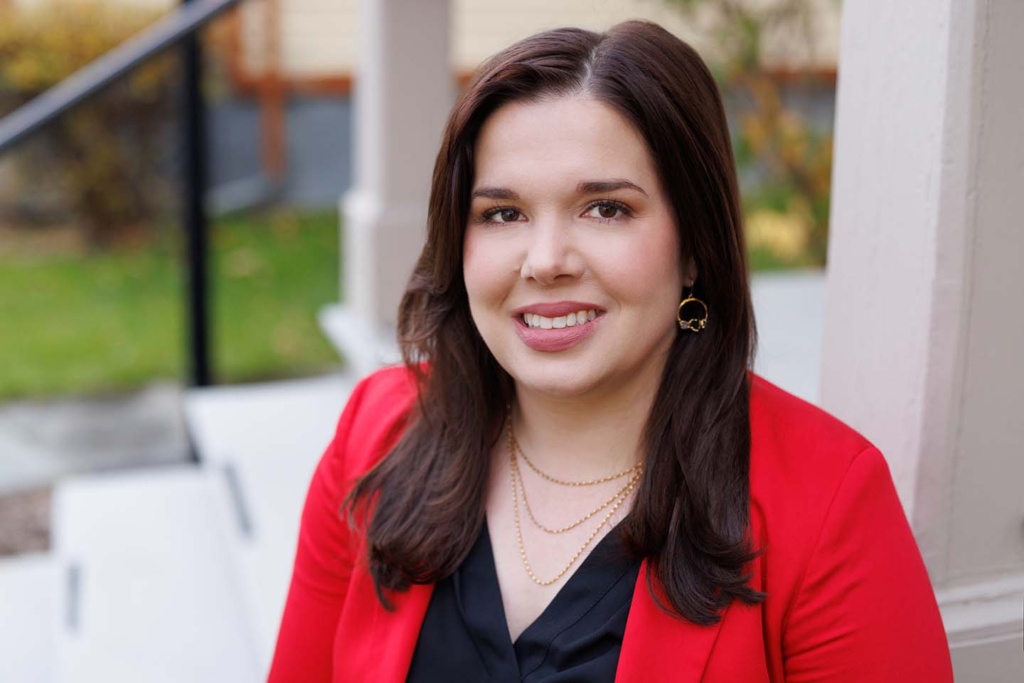
Effective January 2, 2026, the National Susan B. Anthony Museum & House will be under the leadership of new President & CEO Allison Hinman. Following a national search that garnered 27 well-qualified candidates, Hinman was chosen as the successor to outgoing President & CEO Deborah L. Hughes, who has led the organization for more than 18 years.

About Allison Hinman

Hinman joined the Anthony Museum in 2021 as Deputy Director and was promoted to Chief Operating Officer in 2024. An experienced museum professional, Hinman provides significant experience in fundraising, education, and programming. She helped develop the Anthony Museum’s current strategic plan and as a member of the Building and Exhibit Planning Committee for the last five years, she provides crucial continuity for the ongoing campus expansion. Under her leadership as Chief Operating Officer, school visitation has surged to more than 2,000 students per year, and the Museum became an early voting site for Monroe County and welcomed 6,000 voters.

Prior to joining the Anthony Museum, she developed a wealth of experience in historic house museums at the George Eastman Museum in Rochester and the Seward House Museum in Auburn, New York. In addition to her museum work, Hinman teaches courses in museum studies and museum education at SUNY Oswego. She holds two masters degrees from Syracuse University, one in museum studies and another in arts leadership administration.

About Deborah L. Hughes

Hughes leaves the Anthony Museum following an 18-year tenure during which she quadrupled the organization’s annual income, doubled its on-site attendance, and secured its absolute charter as a museum. She also guided a restoration of the Susan B. Anthony House, a National Historic Landmark, and increased community engagement with programs like VoteTilla and the 2020 Quilt Project. An inspiring speaker and honored member of the Rochester community, Hughes says, “Though it is difficult to leave, I’m proud to be leaving the Anthony Museum with a diverse, highly skilled staff and an energetic board that is more than ready to continue the work of preserving Susan B. Anthony’s legacy for decades to come.”

Endorsements

“As Board Chair, I have worked with Allison for the past three years.  She has improved the programming and increased the number of school children visiting the House; she understands the legacy of Susan B. Anthony; she has significant museum experience; and she has been an active participant in the design of the Interpretive Center. She has the vision, passion and dedication to lead the Museum into the future. The Board could not have made a better choice.”
—Craig J. Zicari, Chair, Board of Trustees

“Allison Hinman is the ideal person to lead the National Susan B. Anthony Museum and House. She has a unique combination of experience and expertise that will be so important in the future campus expansion project. She is a strong advocate for Rochester and the role of museums as cultural and educational resources for the city. She is also a respected professional with a stellar reputation around the state and nation.”
—Brent Glass, Director Emeritus of the Smithsonian National Museum of American History

“I am thrilled that Allison Hinman will be the next CEO of the National Susan B. Anthony Museum and House. Her graduate training in Museum Studies and Arts Administration at Syracuse University and her work experience at several of the leading historic house museums in our area leave her uniquely prepared for this role. Allison is deeply committed to meeting the needs of the community and she will ensure that the Anthony Museum continues to expand offerings and inspire future changemakers with Anthony’s vision of human rights for all.”
—Tamar W. Carroll, PhD, Secretary, Board of Trustees

“Allison will continue to build on the museum’s legacy while leading the expansion and innovating for the future. Given her innate ability to educate and inspire others regarding the life and work of Susan B. Anthony, the Board values Allison’s capacity to foster a sense of community.”
—Heidi Schult Gregory, Board of Trustees

We’re Expanding!

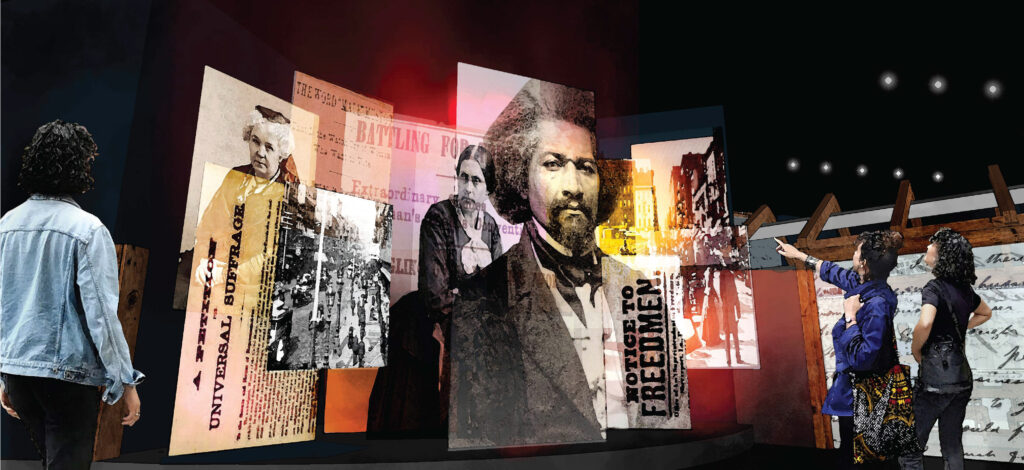
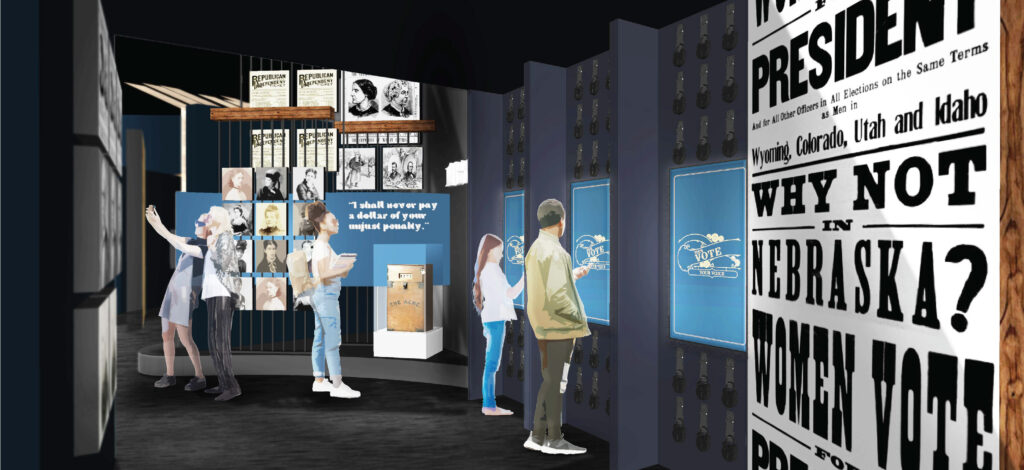
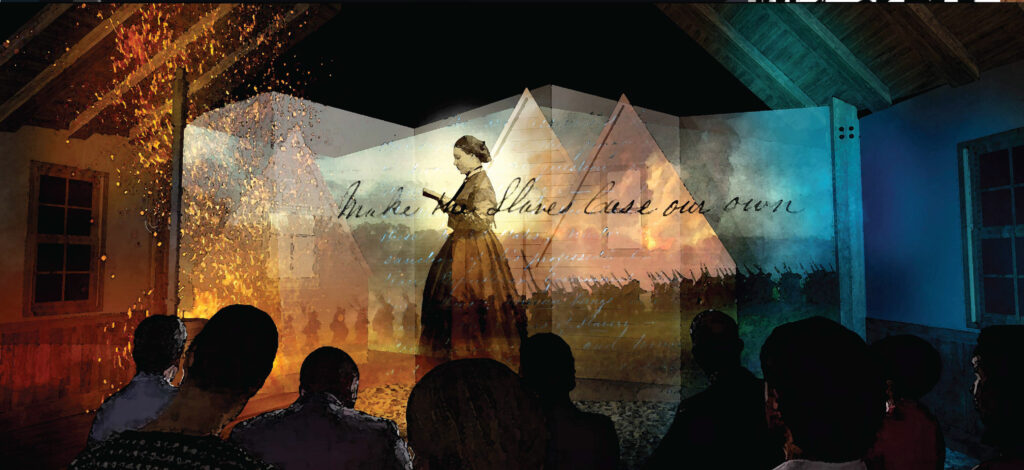
Plans are under way to expand the Anthony Museum campus! We will be building a new interpretive center at the intersection of Brown Street and Jefferson Ave, about 900 feet from our current campus.

exhibit rendering

The new building will have a 3,000 sq ft wing dedicated to the long-term care, conservation, and research of our permanent collection of invaluable objects, with state-of-the-art security, fire suppression, and environmental controls. We will have a 6,000 sq ft exhibit area featuring engaging, immersive experiences that will share the impact and relevance of Susan B. Anthony’s life and work. In addition to flexible space for programs, receptions, and the museum shop, there will be a catering kitchen and enough bathrooms to accommodate bus tours and school groups during the busiest seasons.

For eight decades, the Anthony Museum’s impact has been constrained by the capacity of its facilities. (The Susan B. Anthony House is limited to 35 visitors at a time, by fire code.) The campus expansion will increase that capacity five-fold! This will allow the Museum to accommodate thousands more visitors. During the sunny months, those visitors will be mostly tourists who come from outside our area, bringing economic growth. During the winter months, the Anthony Museum will have to capacity to expand our outreach and programs for our local community.

We are excited to move ahead with this project that will allow us to expand our reach and impact. The property, soon to be known as 1 Jefferson Avenue, has been acquired. The site and parking and exterior building plans have been approved by the City.

We have raised $16 million of the $25 million needed for the project. Once we have raised the balance, we will be able to take the next steps to break ground.

exhibit rendering
exhibit rendering

Meet: John Van Voorhis

While our Carriage House has been under construction, many guests might have noticed a new addition in the well-known Front Parlor of 17 Madison Street.

This room has become the temporary location for this bust of attorney John Van Voorhis. Van Voorhis was born in Decatur, New York, in 1826. He passed the bar in 1851 and began practicing in Elmira, New York. Later, he moved to Rochester and opened his own practice in 1854. He defended people like abolitionist Frederick Douglass and assisted the Seneca Nation in land disputes. 

Van Voorhis was Susan B. Anthony’s lead defense attorney when she was tried and convicted of voting in the presidential election of 1872. 

He also served three terms as a United States Congressman between 1879 and 1895. 

A Chicago artist, Robert Lee MacCameron, was hired to paint a portrait of Van Voorhis. MacCameron has pieces at the Smithsonian American Art Museum in DC, the Memorial Art Gallery in Rochester, and museums in England and France. He is most notable for painting a portrait of President William Howard Taft.

It was typical for the artist to live in residency, so he lived with the Van Voorhis family in their Rochester home. While there, MacCameron started a relationship with Van Voorhis’ daughter Louise, and the two later married. 

The newlyweds moved to Paris, where MacCameron continued his art education at the Beaux Arts School and received several prestigious awards for his work. 

Upon their return to Rochester, MacCameron sculpted a marble bust of his Father-in-Law, which is currently in the Ontario County Courthouse, where Susan B. Anthony’s trial was held. This bronze cast is of the original marble bust. The Van Voorhis descendants donated the bronze bust to the Anthony Museum in 2021.

We hope you visit the museum and say hi to John! 

Get to Know Rhoda DeGarmo

Meet Rhoda DeGarmo, an ardent anti-slavery advocate, temperance worker, suffragist, friend of Anthony and Stanton, yet for many today, an unfamiliar name. What did she do for women’s rights? What would she say to us today about the importance of voting?

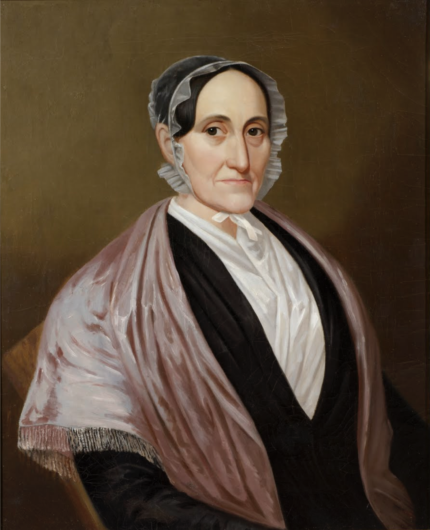
Born in Massachusetts in 1798 or 1799, Rhoda and her husband, Elias DeGarmo, were farmers in Gates, NY, just outside of Rochester, in the 1800s. The DeGarmos were part of the network of anti-slavery activists who made up the Underground Railroad in the region. Their home often provided refuge for enslaved persons fleeing to Canada. She was one of the first people to join the Western New York Anti-Slavery Society when it was formed in 1842. She later became part of its equivalent of an executive committee, organizing Anti-Slavery Fairs all around the region. When Daniel and Lucy Anthony moved with their family to a neighboring farm in Gates in late 1845, the families discovered they had much in common and became close friends, working together on anti-slavery, temperance, and women’s rights causes.

In June of 1848, Rhoda DeGarmo and other Quakers walked out of the Genesee Yearly Meeting of Friends when the elders objected to their anti-slavery activities. The next month, at the Women’s Rights Convention in Seneca Falls, she was chosen as one of the organizers for the adjourned convention, to be held in Rochester in August. She supported the move to appoint a woman to preside over the Rochester convention, something strongly opposed by other women delegates as “a most hazardous experiment.” Lucretia Mott and Elizabeth Cady Stanton refused to sit on the dais with a woman presiding.

Throughout her life, Rhoda DeGarmo worked with anti-slavery groups, with state and local women’s rights organizations, and  temperance organizations, earning her a respected place as a human-rights activist among her contemporaries.  She was a frequent visitor at the Anthony home in Rochester. She was a member of the Rochester Political Equality Club formed by Mary Anthony. In 1872, when Susan B. Anthony famously registered and voted in the presidential election, claiming her vote as a right of citizenship under the XIV Amendment, Rhoda DeGarmo, by then in her 70s, was right there, one of the 14 other women voting with her. Rhoda DeGarmo died in 1873, a few months after she dared to vote.

[Ed. note: In 1848, Rhoda DeGarmo’s portrait was created by artist C. Hoag, a painting that came to the Anthony Museum from a direct descendant. The portrait was conserved in 2012 with funding provided by the Greater Hudson Heritage Network and work performed by Tracy Dulniak of Great Lakes Art Conservation, LLC. This portrait is on display in Mary Anthony’s study in the Susan B. Anthony House at the Anthony Museum.]

A Season with Susan

This year we were honored by the gift of a gorgeous green and silver wreath that now festoons the front door of the Susan B. Anthony House. It is difficult to imagine what Susan herself might have said about it, since there were few recorded years where Susan chose to decorate 7 Madison Street for the season. In keeping with the style of the Society of Friends (which you might know as the “Quakers”), the Anthony family celebrated the holidays a little differently than expected; there were no elaborate adornments, no tree in the parlor, and certainly no cookies left out for Santa Claus. 

Then and now, members of the Society of Friends were known for their subdued celebrations, “With no minister, no program and no choir, the Quaker congregation will sit quietly in a room lit by a fireplace and candles…the entire four-hour service could pass without a sound.” (Virginian Pilot) Many Quakers tend to downplay the showier side of festivities, instead focusing on cultivating goodwill, peace, and community spirit even during the cold New York winter. Mr. and Mrs. Anthony raised their children in a branch of the Friends that emphasized simplicity, equality, and good action toward others, but certainly did not shy away from celebrating the holidays with gusto. The most notable deviance from cultural norms would likely have been their toast to the New Year — completely devoid of alcoholic beverages! In the Anthony House today, there is still preserved a velvet cloak which Susan received as a holiday gift from Mrs. Emily Gross, all the way from Chicago. Throughout Susan’s writings, we find her thanking various friends for shawls and fruit cakes around the holidays, but most of all we hear Susan and her closest allies speaking of how the work must go on, even on Christmas Morning. The Anthonys surely celebrated every day of the season as an opportunity to do good.

In reality, Americans during Susan’s childhood were just beginning to celebrate the holidays as we know them today, with Charles Dickin’s beloved A Christmas Carol published in 1843, and the iconic Christmas tree only gaining popularity after the Civil War. Life in the Antebellum period startled Americans. The United States were not as safe and warm as some had thought, but “At this cross-roads of progress and nostalgia, Americans found in Christmas a holiday that ministered to their needs.” (History Today) Practitioners of many religions joined in this nationwide joy, bringing a variety of traditions together under the snowy blanket of the “holiday season”.

Christmas Eve is a simple celebration for Quakers, The Virginian Pilot

Christmas in 19th Century America, History Today

Susan B. Anthony vs. The List

Every election cycle, the National Susan B. Anthony Museum & House is barraged with inquiries about the Susan B. Anthony List*.  “The List” is a PAC, a political action committee organized for the purpose of raising and spending money to elect and defeat candidates. We have no affiliation with “The List”, and we find their use of Susan B. Anthony’s name in support of their agenda to be misleading, deceptive, and damaging to Anthony’s legacy.

For decades, “The List” has been supporting candidates who promise to: 1. Defund Planned Parenthood, 2. Appoint only “pro-life” judges, and 3. Support overturning Roe v. Wade.

In the past, we have responded to inquiries about “The List” by clarifying the historical record about what Susan B. Anthony said or didn’t say about abortion (she said very little). Our website contains several articles that cover this in depth. (see below)

However, with the recent leak of the draft Supreme Court opinion in regard to Roe v. Wade, “The List” is getting media attention as they anticipate a victory for their anti-woman, anti-democracy agenda. They proclaim in their mission statement: “If Roe is indeed overturned, our job will be to build consensus for the strongest protections possible for unborn children and women in every legislature and in Congress.” 

But Roe v. Wade is not just about abortion access or reproductive choice; that is another deception. 

What is at stake is perhaps the most essential of our inalienable human rights: the right of an individual to make critical decisions about her (or his) own physical body in the pursuit of life, liberty and happiness. Susan B. Anthony, in her own words, stood for “woman’s right to control of her own person.”

If this right is compromised so profoundly, all other human rights are fragile: freedom of  religion, freedom of speech, freedom of assembly, and even the freedom to elect a government of the people, by the people, for ALL the people. Susan B. Anthony fought her whole life to secure these inalienable rights, and this fight is as relevant as ever.

To suggest that Susan B. Anthony would support government intervention in a woman’s decision about a pregnancy is abhorrent. To associate Susan B. Anthony’s name with any action that would criminalize a woman’s right to make decisions affecting her body, health, and welfare is a bizarre and dangerous distortion of Anthony’s life and work. 

As the organization that has preserved Susan B. Anthony’s National Historic Landmark home and interpreted her life and work for more than 75 years, the National Susan B. Anthony Museum & House goes on record in opposition to The List and their misappropriation of her name. We stand with Susan B. Anthony for a woman’s right to control of her own person.

Deborah L. Hughes
President & CEO
National Susan B. Anthony Museum & House

*The Susan B. Anthony List rebranded as Susan B. Anthony Pro-Life America in June 2022.

Pertinent Website Articles:

https://susanb.org/misrepresenting-susan-b-anthony-on-abortion/

https://susanb.org/were-not-that-susan-b-anthony/

https://susanb.org/anthony-museum-raises-concern-over-continued-misuse-of-anthonys-name-and-legacy/

https://susanb.org/rochester-icon-defamed/

On news of a presidential pardon for Susan B. Anthony on August 18, 2020

Objection! Mr. President, Susan B. Anthony must decline your offer of a pardon today.

Anthony wrote in her diary in 1873 that her trial for voting was “The greatest outrage History ever witnessed.”  She was not allowed to speak as a witness in her own defense, because she was a woman. At the conclusion of arguments, Judge Hunt dismissed the jury and pronounced her guilty.  She was outraged to be denied a trial by jury. She proclaimed, “I shall never pay a dollar of your unjust penalty.” To pay would have been to validate the proceedings. To pardon Susan B. Anthony does the same.

If one wants to honor Susan B. Anthony today, a clear stance against any form of voter suppression would be welcome. Enforcement and expansion of the Voting Rights Act of 1965 would be celebrated, we must assure that states respect the 14th, 15th, and 19th Amendments to the United States Constitution. Support for the Equal Rights Amendment would be well received. Advocacy for human rights for all would be splendid. Anthony was also a strong proponent of sex education, fair labor practices, excellent public education, equal pay for equal work, and elimination of all forms of discrimination.

As the National Historic Landmark and Museum that has been interpreting her life and work for seventy-five years, we would be delighted to share more.

Deborah L. Hughes
President & CEO
The National Susan B. Anthony Museum & House

Monday Lecture Series 2020-2021

The National Susan B. Anthony Museum & House proudly presents the 18th season of its popular Monday Lecture Series. This season’s line-up features ten guest speakers covering a range of timely topics inspired by the life, work, and legacy of Susan B. Anthony.  

This season will be presented online, with each presentation offered to registered guests at 1pm ET.


Sept. 21, 2020 Cartooning for Suffrage! : Nina Evans Allender
Ronnie Frishman
Oct. 19, 2020 Women in the Nixon Administration: Defining Simple Justice
Yi Shun Lai, MFA
Nov. 16, 2020 Amnesia and Politics in the Mount Hope Cemetery
Katie Terezakis, PhD
Dec. 14, 2020 Relationships and Rights: Sophonisa Breckinridge, Same-Sex Relationships, and Women’s Activism in Modern America
Anya Jabour, PhD
Jan. 11, 2021 Migrant Longing: Letter Writing Across the U.S.-Mexico Borderlands
Miroslava Chavez-Garcia, PhD
Feb. 8, 2021 The Role of Imagery in Social Movements
Tamar W. Carroll, PhD
Mar. 8, 2021

Suffragists: Public Relations Pioneers

How on earth did suffragists get their message out without Facebook or Instagram?! Join us for our March 8th, Monday Lecture, featuring Arein Rozelle from St. John Fisher College, and discover how pioneering public relations suffragists were the influencers of their day!

Apr. 12, 2021 When White Women Wanted a Monument to Black ‘Mammies’–A 1923 Fight Shows Confederate Monuments Are About Power, Not Southern Heritage
​Alison Parker, PhD
May 10, 2021 Manhood Enslaved: Bondmen in Eighteenth- and Early Nineteenth-Century New Jersey 
Ken Marshall, PhD
June 7, 2021 Why the ERA went MIA
Jennifer M. Lloyd, PhD

 Individual lectures are $25 each.  

To purchase reservations, click here.


Underpin and Overcoat

Rochester Contemporary Art Center (RoCo), the National Susan B. Anthony Museum & House, and SewGreen Rochester present a new public art installation celebrating the major women’s rights anniversaries being celebrated this year. “Underpin and Overcoat,” by artists Amelia Toelke and Andrea Miller explores the idea of jewelry as signage, which wearers adorn for both themselves and for others. Inspired by the objects Suffragists often made—such as pins, ribbons, sashes, and medals—“Underpin and Overcoat” gives greater presence to jewelry and wearable objects that are tools for protest, action, and identity-formation.

This public installation takes the form of oversized buttons that are proportionally scaled to ornament several Rochester buildings. Incorporating expressions, icons, sayings, and slogan, these buttons will be affixed to several building facades between Rochester Contemporary Art Center (137 East Ave.) and the National Susan B. Anthony Museum & House (17 Madison St.), Sew Green (438 West Main St.). “Underpin and Overcoat” aims to unify the public, inspire action, bring joy, and create a space for viewers to insert their own messages and ideals. The work aims to help us discuss opposing views, ask questions, and find commonality in shared sentiments. During this critical political season, “Underpin and Overcoat” enlarges the intersection of jewelry, political history, and social justice on the streets—much as the Suffragists did themselves.
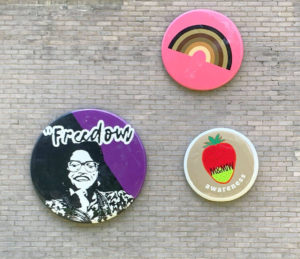
The artists also invited local artists and organizations to contribute designs for some of the buttons to provide a platform for additional voices. Contributors include Amanda Chestnut, Tania Day, Thievin’ Stephen, Erica Jae, Abiose Spriggs, and the Seneca Art & Culture Center at Ganondagan.

In partnership with SewGreen Rochester, Christ Church, and Susan B Anthony Museum and House, RoCo will host an artist talk and Sash Memorial workshop on Saturday, July 25. Inspired by the iconic “Votes for Women” sashes worn by Suffragists from 1850 – 1920, the artists, Sew Green staff, and other collaborators invite all community members to create their own, contemporary versions of this historic piece of political ephemera. All are welcome, especially those with little sewing experience. Sashes made at this event will be collected and exhibited in the artists’ larger exhibition, Worn.
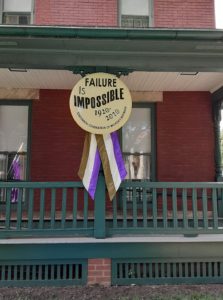
Update 7-24-2020

The public art installation by artists Amelia Toelke and Andrea Miller is now on display outside 19 Madison Street, the Anthony Museum Visitor Center!

ABOUT THE ARTISTS

Andrea G. Miller is an educator and visual artist whose practice is greatly influenced by the traditions of metalsmithing and sculpture, community outreach, and public education. Miller, born and raised in the Midwest, completed her MFA from the University of Wisconsin – Madison and earned a BS in art education as well as a BFA in metals from Ball State University. She maintains an active studio practice and exhibition record outside of the classroom. In 2017, she was awarded the Lilly Endowment’s Teacher Creativity Fellowship, which allowed her to restore and travel with her vintage camper, LeRoy. She and the camper traveled over 5,000 miles from Indiana, throughout the southwest and back. Travel and adventure have become an important part of her life and she strives to empower her students to approach making and their life with the same sensibilities.

Amelia Toelke is a visual artist whose work engages the language of jewelry to explore the complex negotiation between identity, culture, and adornment. Toelke’s work activates the space between object and image, reality and representation, revealing her long-time infatuation with flatness. Through a palette of recurring imagery and tropes her work seeks the point where humor and sentimentality meet. Toelke currently lives in Chatham, NY.

ABOUT THE COLLABORATORS

Amanda Chestnut’s work focuses on the representation of history—and in particular, how the history of race and gender impacts modern narratives. Her art has been exhibited in Rochester at Firehouse Gallery, Joe Brown Gallery, University of Rochester, and High Falls Art Gallery at the Center at High Falls. She was formerly a resident at the Center for Photography at Woodstock in Woodstock, NY, and at Genesee Center for the Arts & Education in Rochester, NY. She has held graduate assistantships at Visual Studies Workshop and the Criminal Justice Department, both at the College at Brockport in Rochester. Chestnut holds an MFA graduate of Visual Studies Workshop, Rochester, NY. As an artist interested in both upending and interpreting traditional definitions of the archive, she pairs archival images and text with contemporary imagery and her own perspective to convey the history, emotion, and lasting socio-economic impact of the past. Her previous works incorporate photographic poems that draw from archival imagery, text-based poems, and Chestnut’s hair. Most recently Chestnut curated “Verified” a group exhibition at Loud Cow in Spencerport, NY, and the Rochester Biennial at the Rochester Contemporary Art Center (RoCo). To learn more about Amanda Chestnut, her personal artistic and curatorial endeavors visit amandachestnut.com.

Tania Day-Magallon is a Mexican American artist who has collaborated in numerous art events and exhibits in Rochester. She started her art education at a young age and attended to different art institutions in Mexico City where she also began her licentiate studies in Fine Arts at a renowned university where Frida Kahlo taught for some years, contributing to an undeniable legacy in the style of many Mexican female artists. Day-Magallon has received and embraced that artistic influence during the years she lived in Mexico, and it is manifested in her artwork as she employs a rich symbolism emphasizing her own cultural identity and spiritual views. Tania Day-Magallon has also participated in art exhibits in Chicago, where she resided for several years; and she has participated in collaboratives, presentations, performances, and has given art workshops at different venues including at her private studio. In addition, Day-Magallon is also passionate about body art including henna design and tattoos; she owned a tattoo parlor in the city of Chicago which has influenced and enriched her artistic career in many aspects. Tania Day-Magallon is currently a member of WOC-Art collaborative, and other art groups and collectives where she remains active. She has also a BA from SUNY, where she continued her studies in visual arts and psychology. Learn more here: daymagallonart.com

Erica Jae was born and raised in the 19th ward of Rochester, NY. Out of love and protection, her mother allowed her only to play from in front of her house up to the stop sign that was located two houses down. Naturally, Erica grew curious about the world beyond her parameters and in college, she majored in social sciences with a concentration in mental health. Over the last 8 years, Erica has worked as an assistant manager, a clinical case manager, and a residential counselor in various group homes. Her work has been featured on NBC nightly news with Lester Holt and published in local magazines. From an early age Erica expressed herself through writing fictional short stories, poetry, and blasting hip hop from the stereo in her room. With her camera as an advocate, Erica tells the stories of the people within her community and beyond. Her work seeks beauty in hidden gems, balance with the duality of light and dark, and stillness in the poetic rhythm of the streets. Learn more here and IG: @artxericajae // @ello_yellow

Born and raised in Atlanta, Ga. Abiose Spriggs received her undergraduate degree at the College of Wooster in Wooster, Ohio for fine art. She was introduced to art through her parents. Her mother is an educator and her father was in art administration. Abiose’s entire upbringing was centered around art thus growing her appreciation for it and leading to further study. Her art focuses primarily on her personal experience and interest as a black person in America. Expressed through various mediums, drawing, printmaking, sculpture, and paint. In her paintings, she loves utilizing the medium to show the artist’s hand often against an attempt to create the absences of the artist hand. Painterly brush strokes that are free and dance across the surface confined by the square. This, to the artist, is what it’s like to be black in America. Being fed the illusion of freedom but never allowed to have it. Color has always been important in her art, the connection of color to emotion is a large driving force behind anything she draws. Spriggs is continually inspired by painters who`utilize bold colors and big canvases and those that use multiple mediums. Jacob Lawrence, Josef Albers, Sam Gilliam, David Hammonds, Cezanne, Paul Gaugin, Egon Schile, Emma Amos, Wanda Koop, Radcliffe Bailey, Virginia Jaramillo, Betye Saar, Kerry James Marshall, and Elizabeth Catlett to name a few.

Thievin’ Stephen makes art in Rochester, where part of supporting local artists is avoiding businesses that don’t. Learn more here: thievinstephen.com or Instagram: @thievinstephen