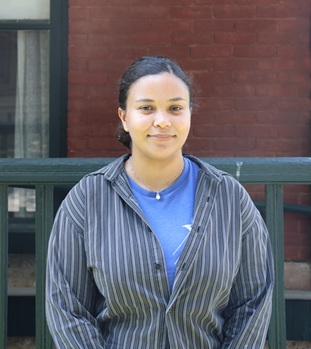
Fighting for Equality: Q&A with Taylor Phillips

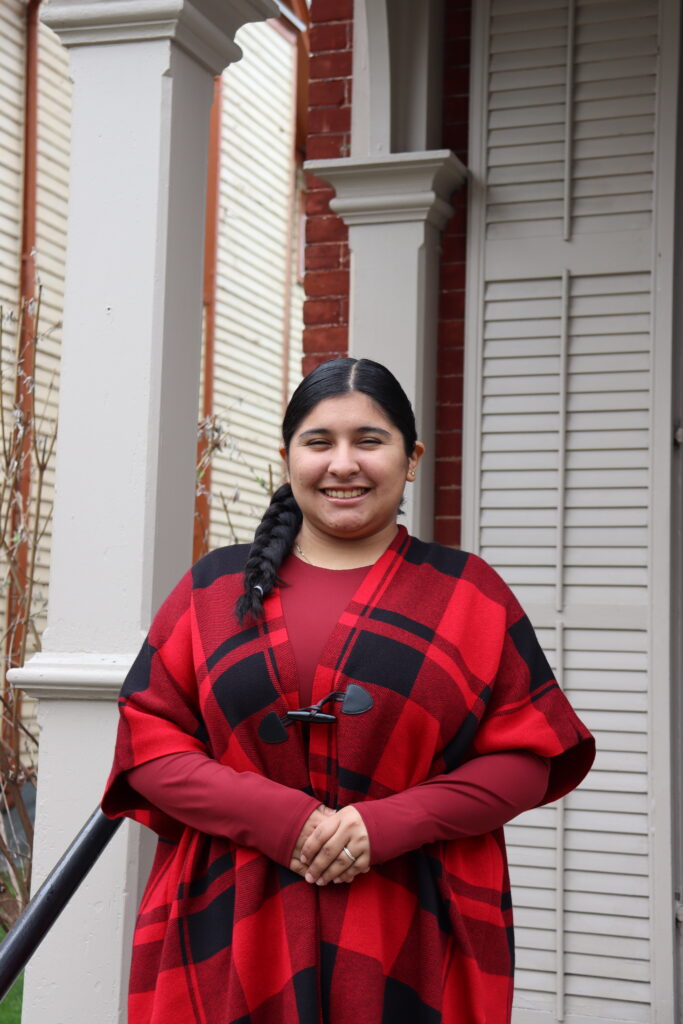
A graphic that reads "Guest Lecture Series: Taylor Philips" with a photograph of Phillips.

In anticipation of her guest lecture on Wednesday, June 10, “Fighting for Equality: World War I and American Women’s Struggle for Suffrage,” we sat down with Taylor Phillips for a brief preview of the topic.

How important were women to American participation in World War I?

Women were incredibly important to the American war effort in the First World War. With almost 3 million men being drafted for the war, their absence left tremendous gaps in all kinds of industries around the country that would then be taken up by women. Women were instrumental to the success of the war both at home and abroad, as they organized vast networks to fundraise for war bonds, conserve food, produce personal items for soldiers, and so much more. They were also part of the very infrastructure of the war through their service to the U.S. military in all manner of clerical positions, as nurses and physicians, and through their work with numerous voluntary organizations.

What roles would we be surprised women played?

I think people might be surprised to learn that the very first women to officially enlist and serve in the U.S. Navy (or any branch of the U.S. armed forces for that matter), were women in World War I. American women also helped pioneer physical and occupational therapy professional practices in World War I by working as reconstruction aides to systematically rehabilitate wounded soldiers. And despite the fact that women abroad did not serve in combat roles in this war, their work often brought them close to the Front, and into the constant danger that came with it.

We tend to hear a lot about women supporting the war effort by going to work during World War II. Why do you think women’s participation in World War I has become a blind spot?

In America, I think the discussion of World War I in general gets overshadowed by World War II because the U.S. was involved in the First World War for a much shorter period of time (less than 2 years) compared with the Second World War, and World War I did not have the distinct moral dichotomy that World War II did. The Great War is also further back in American memory, as there are no living participants of this global conflict still with us today. With all of this in mind, I think women’s participation in World War I is often particularly overlooked because the war did not have a major lasting impact on women’s equality in society that later conflicts would have (with an exception, of course, for women gaining their right to vote). 

How did this work end up contributing to the suffrage movement?

It was a long-held belief in American society that the right to vote only belonged to citizens who could defend their country militarily, which in turn was used as a reason to deny women suffrage. Women’s service in World War I proved to the nation and the world that American women were patriotic, loyal, and capable citizens who were indispensable to the war effort and admirably served and defended their country during wartime. Supporters of women’s suffrage would use women’s wartime service as further proof that women deserved the right to vote, and that suffrage was actually a military necessity to ensure that women could continue to contribute to the war effort effectively.

Join us Wednesday to hear more amazing details on this subject!

Crafting Through History Q&A

featuring Emma Lynch, Visitor Center Manager & Development Associate

On April 25, we will host Crafting Through History: Crochet, the first installment of our new partnership with SewGreen pairing discussions of the women’s rights movement with fiber arts instruction. We asked Emma Lynch, our development associate who will be leading the discussion, a few questions to whet our appetites.

What role has crafting played in the history of the women’s rights movement?

Suffragists such as Carrie Chapman Catt, would hold suffrage fairs: Fairs for women to sell their handmade goods to generate donations for the movement. Crochet, along with other fiber arts like knitting and quilting, would be used as a tool for empowerment and protest.

Was Susan B. Anthony crafty?

When Susan was younger she was quite gifted at needlepoint—we have a reproduction of a sampler that she made when she was around 11 years old in Susan B. Anthony’s study. As she got older, and became busier fighting for universal suffrage and various human rights, she didn’t have too much time to be crafty!

What is it about fiber arts that seems to lend itself to women getting together?

Fiber arts became what some call a form of “quiet activism.” It allowed for individuality, self-expression and created a sense of community. It was a way for women to challenge the idea of femininity while rejecting the notion that fiber arts was simply just “women’s work.”

What is the most surprising thing you’ve learned about crochet?

Trying to find the origins of crochet is not as easy as it might seem. Crochet did not originate from one singular person, culture or country, as various forms of this fiber art can be traced back to countries as far apart as Persia and Ireland.

Allison Hinman Named New President & CEO of Anthony Museum

Hinman Led National Field of Candidates with Experience and Vision

Effective January 2, 2026, the National Susan B. Anthony Museum & House will be under the leadership of new President & CEO Allison Hinman. Following a national search that garnered 27 well-qualified candidates, Hinman was chosen as the successor to outgoing President & CEO Deborah L. Hughes, who has led the organization for more than 18 years.

About Allison Hinman

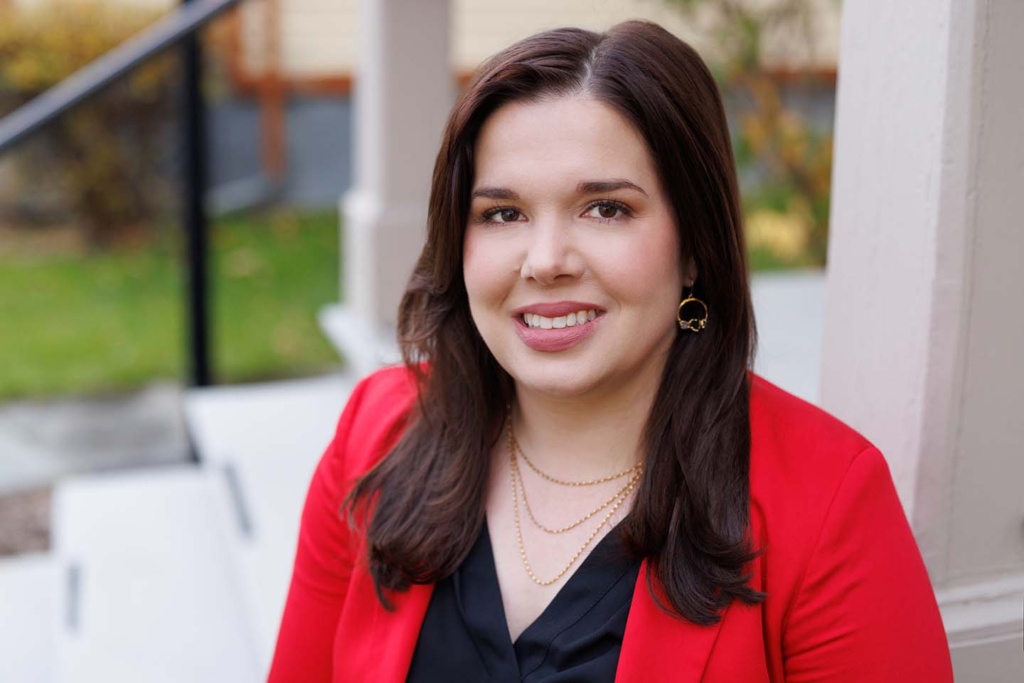
Hinman joined the Anthony Museum in 2021 as Deputy Director and was promoted to Chief Operating Officer in 2024. An experienced museum professional, Hinman provides significant experience in fundraising, education, and programming. She helped develop the Anthony Museum’s current strategic plan and as a member of the Building and Exhibit Planning Committee for the last five years, she provides crucial continuity for the ongoing campus expansion. Under her leadership as Chief Operating Officer, school visitation has surged to more than 2,000 students per year, and the Museum became an early voting site for Monroe County and welcomed 6,000 voters.

Prior to joining the Anthony Museum, she developed a wealth of experience in historic house museums at the George Eastman Museum in Rochester and the Seward House Museum in Auburn, New York. In addition to her museum work, Hinman teaches courses in museum studies and museum education at SUNY Oswego. She holds two masters degrees from Syracuse University, one in museum studies and another in arts leadership administration.

About Deborah L. Hughes

Hughes leaves the Anthony Museum following an 18-year tenure during which she quadrupled the organization’s annual income, doubled its on-site attendance, and secured its absolute charter as a museum. She also guided a restoration of the Susan B. Anthony House, a National Historic Landmark, and increased community engagement with programs like VoteTilla and the 2020 Quilt Project. An inspiring speaker and honored member of the Rochester community, Hughes says, “Though it is difficult to leave, I’m proud to be leaving the Anthony Museum with a diverse, highly skilled staff and an energetic board that is more than ready to continue the work of preserving Susan B. Anthony’s legacy for decades to come.”

Endorsements

“As Board Chair, I have worked with Allison for the past three years.  She has improved the programming and increased the number of school children visiting the House; she understands the legacy of Susan B. Anthony; she has significant museum experience; and she has been an active participant in the design of the Interpretive Center. She has the vision, passion and dedication to lead the Museum into the future. The Board could not have made a better choice.”
—Craig J. Zicari, Chair, Board of Trustees

“Allison Hinman is the ideal person to lead the National Susan B. Anthony Museum and House. She has a unique combination of experience and expertise that will be so important in the future campus expansion project. She is a strong advocate for Rochester and the role of museums as cultural and educational resources for the city. She is also a respected professional with a stellar reputation around the state and nation.”
—Brent Glass, Director Emeritus of the Smithsonian National Museum of American History

“I am thrilled that Allison Hinman will be the next CEO of the National Susan B. Anthony Museum and House. Her graduate training in Museum Studies and Arts Administration at Syracuse University and her work experience at several of the leading historic house museums in our area leave her uniquely prepared for this role. Allison is deeply committed to meeting the needs of the community and she will ensure that the Anthony Museum continues to expand offerings and inspire future changemakers with Anthony’s vision of human rights for all.”
—Tamar W. Carroll, PhD, Secretary, Board of Trustees

“Allison will continue to build on the museum’s legacy while leading the expansion and innovating for the future. Given her innate ability to educate and inspire others regarding the life and work of Susan B. Anthony, the Board values Allison’s capacity to foster a sense of community.”
—Heidi Schult Gregory, Board of Trustees

We’re Expanding!

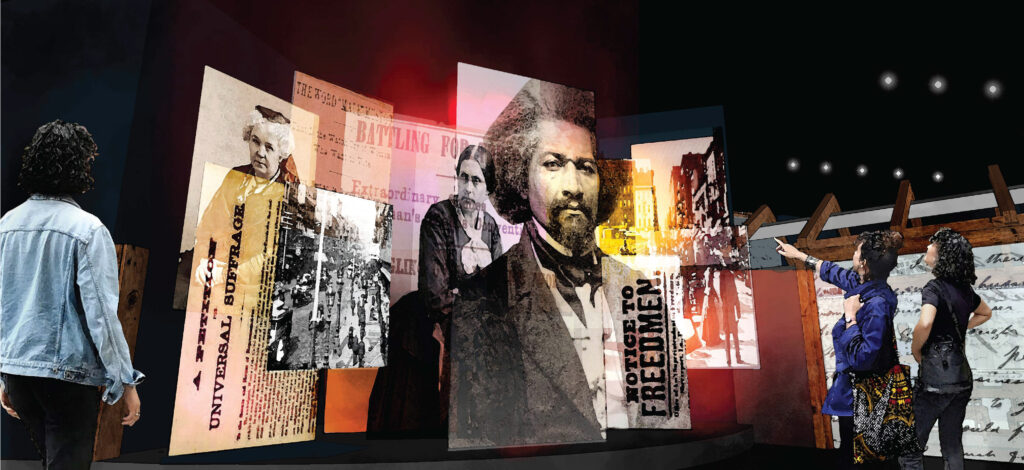
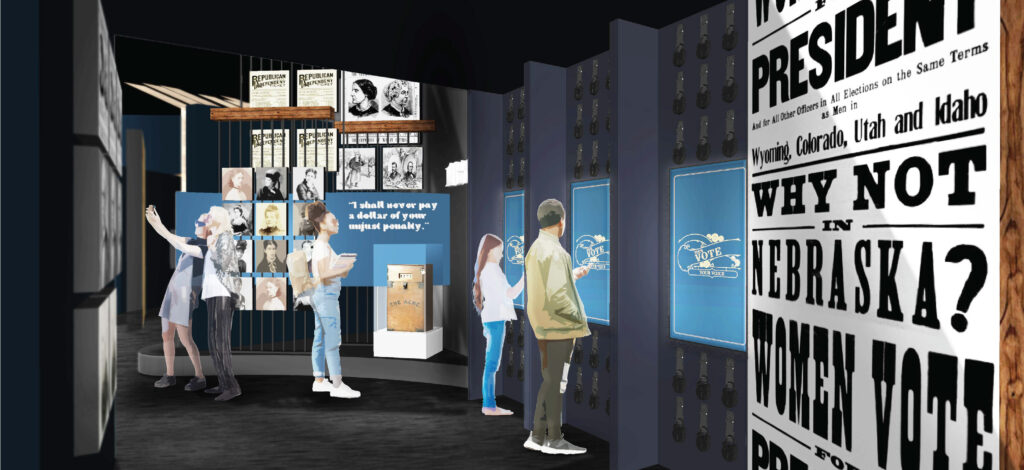
Plans are under way to expand the Anthony Museum campus! We will be building a new interpretive center at the intersection of Brown Street and Jefferson Ave, about 900 feet from our current campus.

exhibit rendering

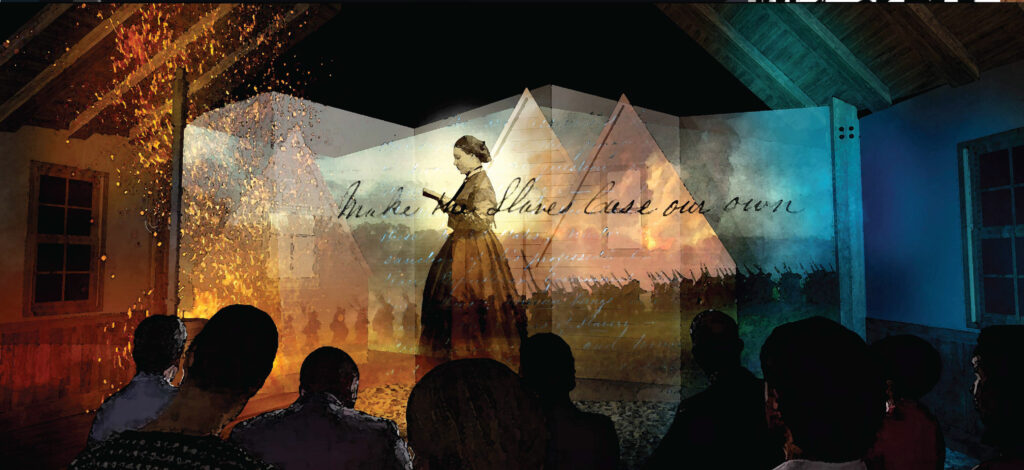
The new building will have a 3,000 sq ft wing dedicated to the long-term care, conservation, and research of our permanent collection of invaluable objects, with state-of-the-art security, fire suppression, and environmental controls. We will have a 6,000 sq ft exhibit area featuring engaging, immersive experiences that will share the impact and relevance of Susan B. Anthony’s life and work. In addition to flexible space for programs, receptions, and the museum shop, there will be a catering kitchen and enough bathrooms to accommodate bus tours and school groups during the busiest seasons.

For eight decades, the Anthony Museum’s impact has been constrained by the capacity of its facilities. (The Susan B. Anthony House is limited to 35 visitors at a time, by fire code.) The campus expansion will increase that capacity five-fold! This will allow the Museum to accommodate thousands more visitors. During the sunny months, those visitors will be mostly tourists who come from outside our area, bringing economic growth. During the winter months, the Anthony Museum will have to capacity to expand our outreach and programs for our local community.

We are excited to move ahead with this project that will allow us to expand our reach and impact. The property, soon to be known as 1 Jefferson Avenue, has been acquired. The site and parking and exterior building plans have been approved by the City.

We have raised $16 million of the $25 million needed for the project. Once we have raised the balance, we will be able to take the next steps to break ground.

exhibit rendering
exhibit rendering

Meet: John Van Voorhis

While our Carriage House has been under construction, many guests might have noticed a new addition in the well-known Front Parlor of 17 Madison Street.

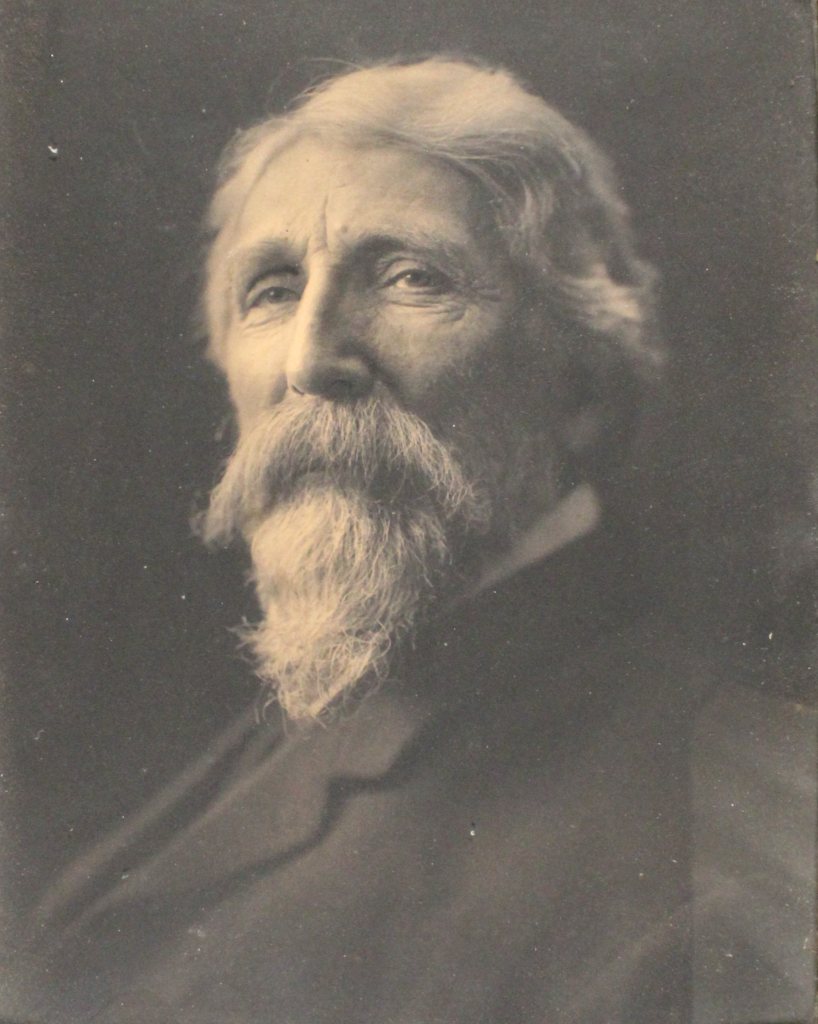
This room has become the temporary location for this bust of attorney John Van Voorhis. Van Voorhis was born in Decatur, New York, in 1826. He passed the bar in 1851 and began practicing in Elmira, New York. Later, he moved to Rochester and opened his own practice in 1854. He defended people like abolitionist Frederick Douglass and assisted the Seneca Nation in land disputes. 

Van Voorhis was Susan B. Anthony’s lead defense attorney when she was tried and convicted of voting in the presidential election of 1872. 

He also served three terms as a United States Congressman between 1879 and 1895. 

A Chicago artist, Robert Lee MacCameron, was hired to paint a portrait of Van Voorhis. MacCameron has pieces at the Smithsonian American Art Museum in DC, the Memorial Art Gallery in Rochester, and museums in England and France. He is most notable for painting a portrait of President William Howard Taft.

It was typical for the artist to live in residency, so he lived with the Van Voorhis family in their Rochester home. While there, MacCameron started a relationship with Van Voorhis’ daughter Louise, and the two later married. 

The newlyweds moved to Paris, where MacCameron continued his art education at the Beaux Arts School and received several prestigious awards for his work. 

Upon their return to Rochester, MacCameron sculpted a marble bust of his Father-in-Law, which is currently in the Ontario County Courthouse, where Susan B. Anthony’s trial was held. This bronze cast is of the original marble bust. The Van Voorhis descendants donated the bronze bust to the Anthony Museum in 2021.

We hope you visit the museum and say hi to John! 

Get to Know Rhoda DeGarmo

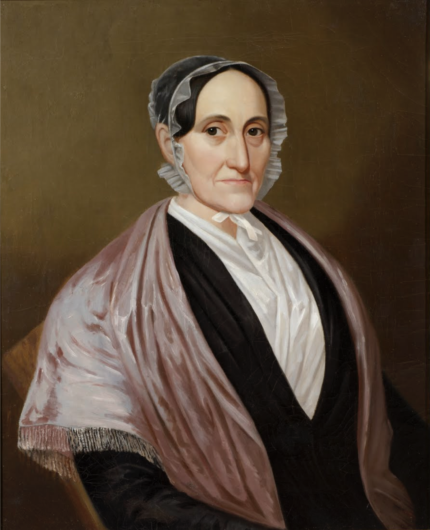
Meet Rhoda DeGarmo, an ardent anti-slavery advocate, temperance worker, suffragist, friend of Anthony and Stanton, yet for many today, an unfamiliar name. What did she do for women’s rights? What would she say to us today about the importance of voting?

Born in Massachusetts in 1798 or 1799, Rhoda and her husband, Elias DeGarmo, were farmers in Gates, NY, just outside of Rochester, in the 1800s. The DeGarmos were part of the network of anti-slavery activists who made up the Underground Railroad in the region. Their home often provided refuge for enslaved persons fleeing to Canada. She was one of the first people to join the Western New York Anti-Slavery Society when it was formed in 1842. She later became part of its equivalent of an executive committee, organizing Anti-Slavery Fairs all around the region. When Daniel and Lucy Anthony moved with their family to a neighboring farm in Gates in late 1845, the families discovered they had much in common and became close friends, working together on anti-slavery, temperance, and women’s rights causes.

In June of 1848, Rhoda DeGarmo and other Quakers walked out of the Genesee Yearly Meeting of Friends when the elders objected to their anti-slavery activities. The next month, at the Women’s Rights Convention in Seneca Falls, she was chosen as one of the organizers for the adjourned convention, to be held in Rochester in August. She supported the move to appoint a woman to preside over the Rochester convention, something strongly opposed by other women delegates as “a most hazardous experiment.” Lucretia Mott and Elizabeth Cady Stanton refused to sit on the dais with a woman presiding.

Throughout her life, Rhoda DeGarmo worked with anti-slavery groups, with state and local women’s rights organizations, and  temperance organizations, earning her a respected place as a human-rights activist among her contemporaries.  She was a frequent visitor at the Anthony home in Rochester. She was a member of the Rochester Political Equality Club formed by Mary Anthony. In 1872, when Susan B. Anthony famously registered and voted in the presidential election, claiming her vote as a right of citizenship under the XIV Amendment, Rhoda DeGarmo, by then in her 70s, was right there, one of the 14 other women voting with her. Rhoda DeGarmo died in 1873, a few months after she dared to vote.

[Ed. note: In 1848, Rhoda DeGarmo’s portrait was created by artist C. Hoag, a painting that came to the Anthony Museum from a direct descendant. The portrait was conserved in 2012 with funding provided by the Greater Hudson Heritage Network and work performed by Tracy Dulniak of Great Lakes Art Conservation, LLC. This portrait is on display in Mary Anthony’s study in the Susan B. Anthony House at the Anthony Museum.]

A Season with Susan

This year we were honored by the gift of a gorgeous green and silver wreath that now festoons the front door of the Susan B. Anthony House. It is difficult to imagine what Susan herself might have said about it, since there were few recorded years where Susan chose to decorate 7 Madison Street for the season. In keeping with the style of the Society of Friends (which you might know as the “Quakers”), the Anthony family celebrated the holidays a little differently than expected; there were no elaborate adornments, no tree in the parlor, and certainly no cookies left out for Santa Claus. 

Then and now, members of the Society of Friends were known for their subdued celebrations, “With no minister, no program and no choir, the Quaker congregation will sit quietly in a room lit by a fireplace and candles…the entire four-hour service could pass without a sound.” (Virginian Pilot) Many Quakers tend to downplay the showier side of festivities, instead focusing on cultivating goodwill, peace, and community spirit even during the cold New York winter. Mr. and Mrs. Anthony raised their children in a branch of the Friends that emphasized simplicity, equality, and good action toward others, but certainly did not shy away from celebrating the holidays with gusto. The most notable deviance from cultural norms would likely have been their toast to the New Year — completely devoid of alcoholic beverages! In the Anthony House today, there is still preserved a velvet cloak which Susan received as a holiday gift from Mrs. Emily Gross, all the way from Chicago. Throughout Susan’s writings, we find her thanking various friends for shawls and fruit cakes around the holidays, but most of all we hear Susan and her closest allies speaking of how the work must go on, even on Christmas Morning. The Anthonys surely celebrated every day of the season as an opportunity to do good.

In reality, Americans during Susan’s childhood were just beginning to celebrate the holidays as we know them today, with Charles Dickin’s beloved A Christmas Carol published in 1843, and the iconic Christmas tree only gaining popularity after the Civil War. Life in the Antebellum period startled Americans. The United States were not as safe and warm as some had thought, but “At this cross-roads of progress and nostalgia, Americans found in Christmas a holiday that ministered to their needs.” (History Today) Practitioners of many religions joined in this nationwide joy, bringing a variety of traditions together under the snowy blanket of the “holiday season”.

Christmas Eve is a simple celebration for Quakers, The Virginian Pilot

Christmas in 19th Century America, History Today

Susan B. Anthony vs. The List

Every election cycle, the National Susan B. Anthony Museum & House is barraged with inquiries about the Susan B. Anthony List*.  “The List” is a PAC, a political action committee organized for the purpose of raising and spending money to elect and defeat candidates. We have no affiliation with “The List”, and we find their use of Susan B. Anthony’s name in support of their agenda to be misleading, deceptive, and damaging to Anthony’s legacy.

For decades, “The List” has been supporting candidates who promise to: 1. Defund Planned Parenthood, 2. Appoint only “pro-life” judges, and 3. Support overturning Roe v. Wade.

In the past, we have responded to inquiries about “The List” by clarifying the historical record about what Susan B. Anthony said or didn’t say about abortion (she said very little). Our website contains several articles that cover this in depth. (see below)

However, with the recent leak of the draft Supreme Court opinion in regard to Roe v. Wade, “The List” is getting media attention as they anticipate a victory for their anti-woman, anti-democracy agenda. They proclaim in their mission statement: “If Roe is indeed overturned, our job will be to build consensus for the strongest protections possible for unborn children and women in every legislature and in Congress.” 

But Roe v. Wade is not just about abortion access or reproductive choice; that is another deception. 

What is at stake is perhaps the most essential of our inalienable human rights: the right of an individual to make critical decisions about her (or his) own physical body in the pursuit of life, liberty and happiness. Susan B. Anthony, in her own words, stood for “woman’s right to control of her own person.”

If this right is compromised so profoundly, all other human rights are fragile: freedom of  religion, freedom of speech, freedom of assembly, and even the freedom to elect a government of the people, by the people, for ALL the people. Susan B. Anthony fought her whole life to secure these inalienable rights, and this fight is as relevant as ever.

To suggest that Susan B. Anthony would support government intervention in a woman’s decision about a pregnancy is abhorrent. To associate Susan B. Anthony’s name with any action that would criminalize a woman’s right to make decisions affecting her body, health, and welfare is a bizarre and dangerous distortion of Anthony’s life and work. 

As the organization that has preserved Susan B. Anthony’s National Historic Landmark home and interpreted her life and work for more than 75 years, the National Susan B. Anthony Museum & House goes on record in opposition to The List and their misappropriation of her name. We stand with Susan B. Anthony for a woman’s right to control of her own person.

Deborah L. Hughes
President & CEO
National Susan B. Anthony Museum & House

*The Susan B. Anthony List rebranded as Susan B. Anthony Pro-Life America in June 2022.

Pertinent Website Articles:

https://susanb.org/misrepresenting-susan-b-anthony-on-abortion/

https://susanb.org/were-not-that-susan-b-anthony/

https://susanb.org/anthony-museum-raises-concern-over-continued-misuse-of-anthonys-name-and-legacy/

https://susanb.org/rochester-icon-defamed/

On news of a presidential pardon for Susan B. Anthony on August 18, 2020

Objection! Mr. President, Susan B. Anthony must decline your offer of a pardon today.

Anthony wrote in her diary in 1873 that her trial for voting was “The greatest outrage History ever witnessed.”  She was not allowed to speak as a witness in her own defense, because she was a woman. At the conclusion of arguments, Judge Hunt dismissed the jury and pronounced her guilty.  She was outraged to be denied a trial by jury. She proclaimed, “I shall never pay a dollar of your unjust penalty.” To pay would have been to validate the proceedings. To pardon Susan B. Anthony does the same.

If one wants to honor Susan B. Anthony today, a clear stance against any form of voter suppression would be welcome. Enforcement and expansion of the Voting Rights Act of 1965 would be celebrated, we must assure that states respect the 14th, 15th, and 19th Amendments to the United States Constitution. Support for the Equal Rights Amendment would be well received. Advocacy for human rights for all would be splendid. Anthony was also a strong proponent of sex education, fair labor practices, excellent public education, equal pay for equal work, and elimination of all forms of discrimination.

As the National Historic Landmark and Museum that has been interpreting her life and work for seventy-five years, we would be delighted to share more.

Deborah L. Hughes
President & CEO
The National Susan B. Anthony Museum & House